Our fourth annual Join the Nightlife workshop, held in Central Texas, brought together conservationists, researchers, and farmers from around the U.S. to explore the many benefits of bats in agriculture. With help from our sponsors, we were able to grant gratis participation to two outstanding students.
Over four days and five nights, participants engaged in lectures, discussions, and hands-on fieldwork. Sessions covered bat biology, survey techniques, acoustic identification, and sustainable farming. Speakers included Merlin Tuttle, Founder of MTBC; Troy Swift, Owner of Swift River Pecans and President of the Texas Pecan Growers Association; Janet Tyburec, Founder of Bat Survey Solutions; and Kyle Slusher, Assistant Professor and Entomologist at Texas A&M University.
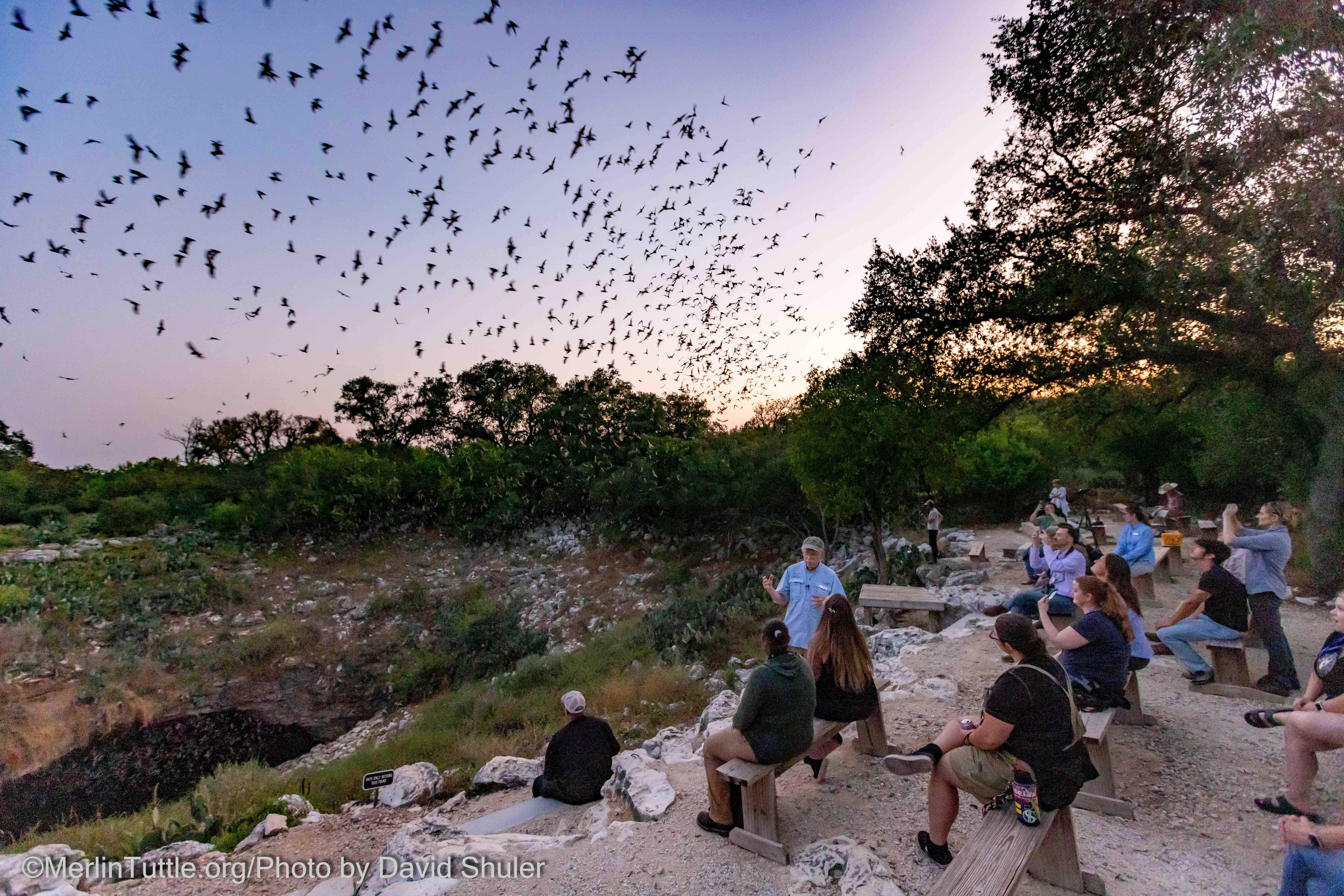
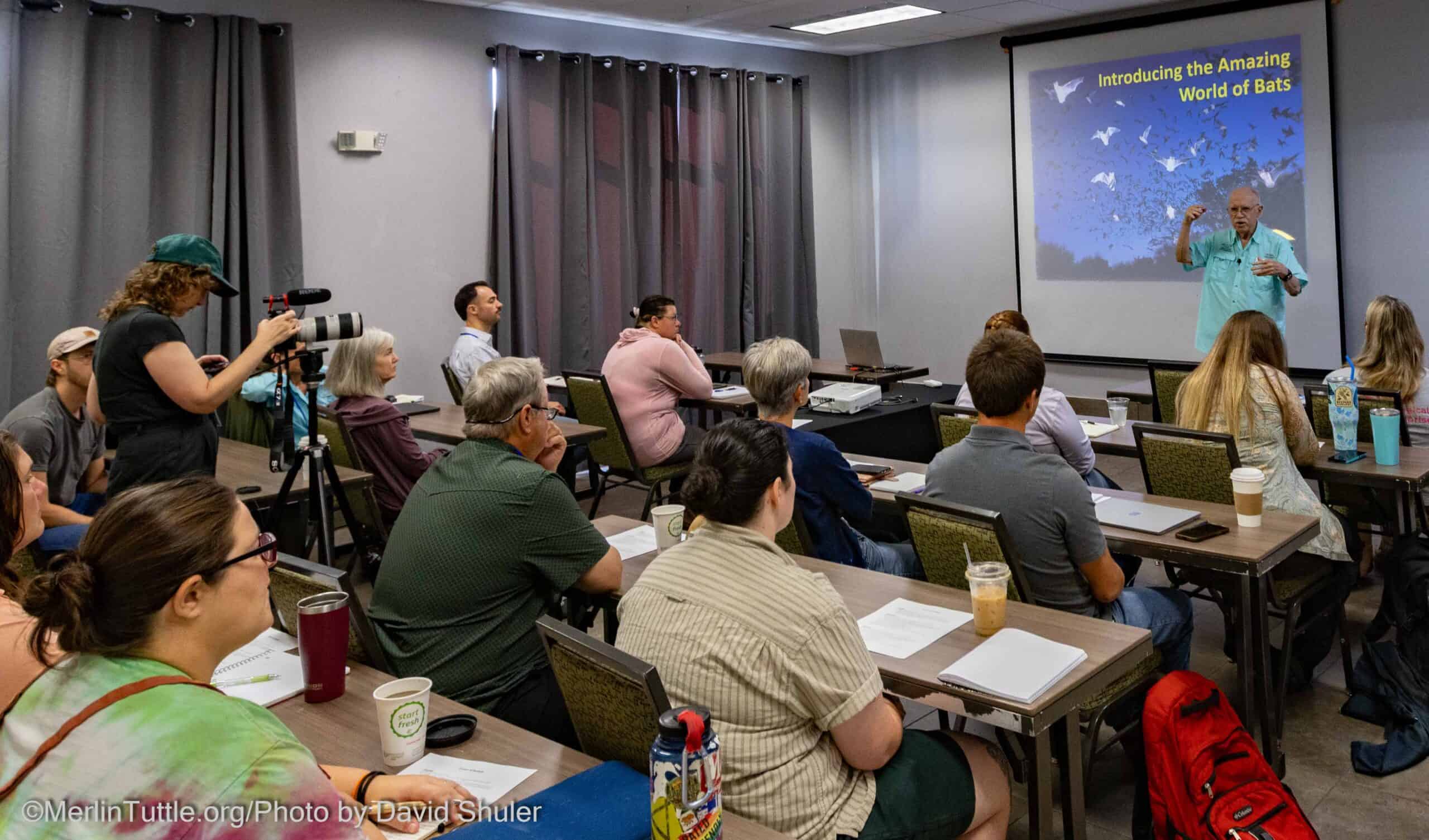
Merlin Tuttle speaking to Join the Nightlife workshop participants as millions of Brazilian free-tailed bats (Tadarida brasiliensis) emerge from Bracken Cave in Texas.
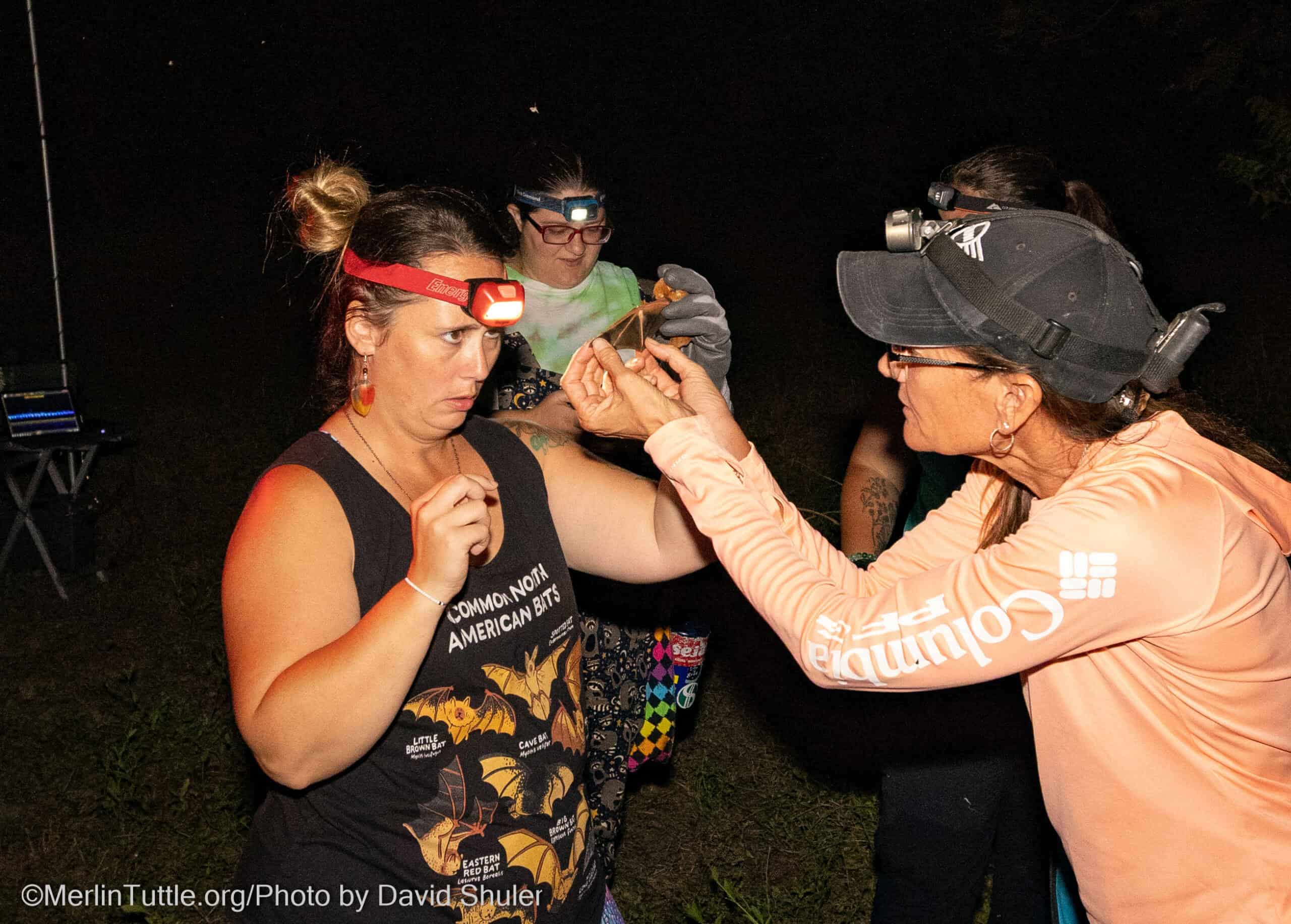
Evenings were spent mist-netting, offering close-up encounters with bats. But beyond the unforgettable experiences, each night of surveying contributed to a four-year dataset. By participating, attendees are helping build a uniquely long-term record of bat activity in the region.
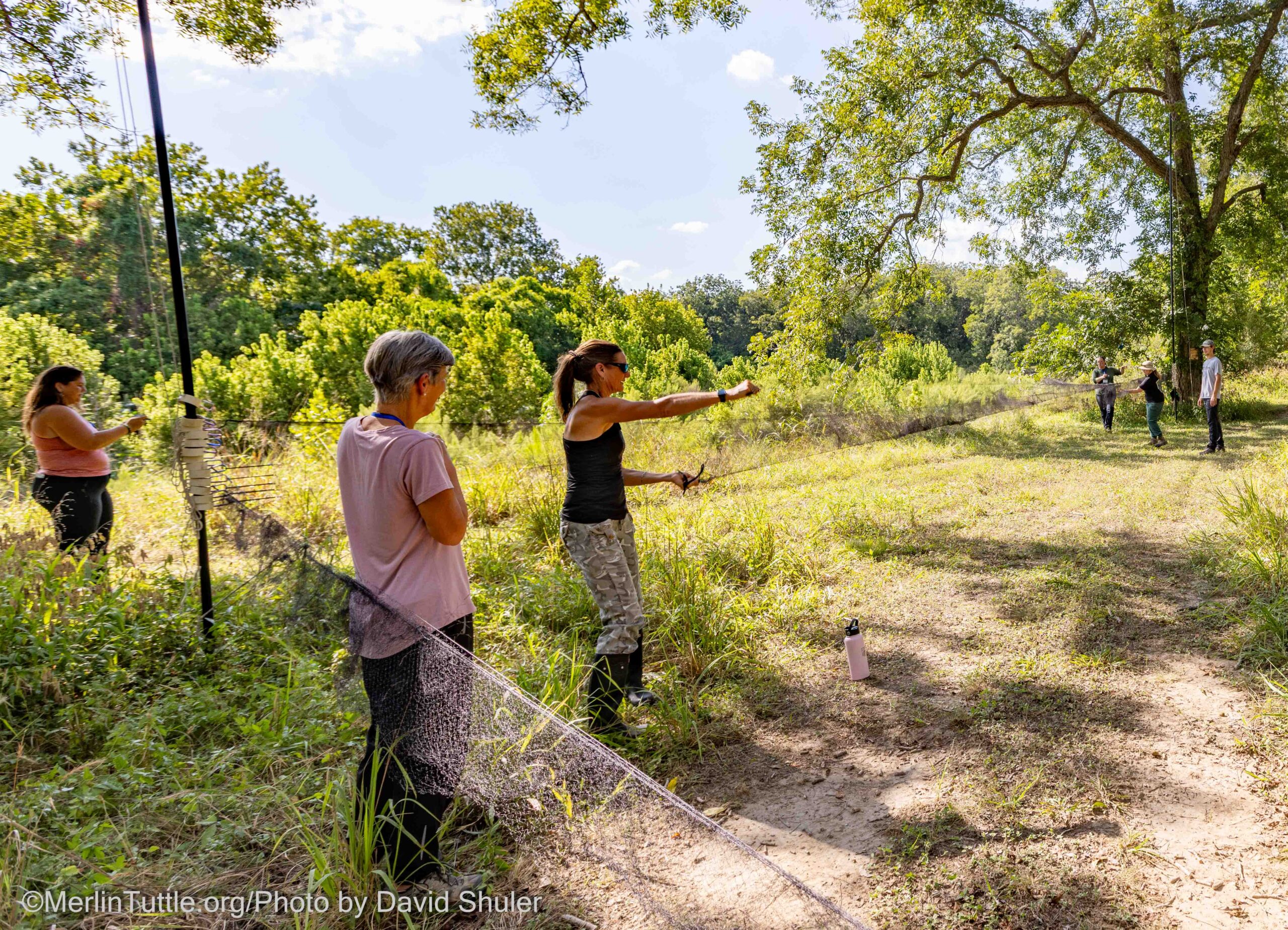
Janet Tyburec teaching about the mist net set across river.
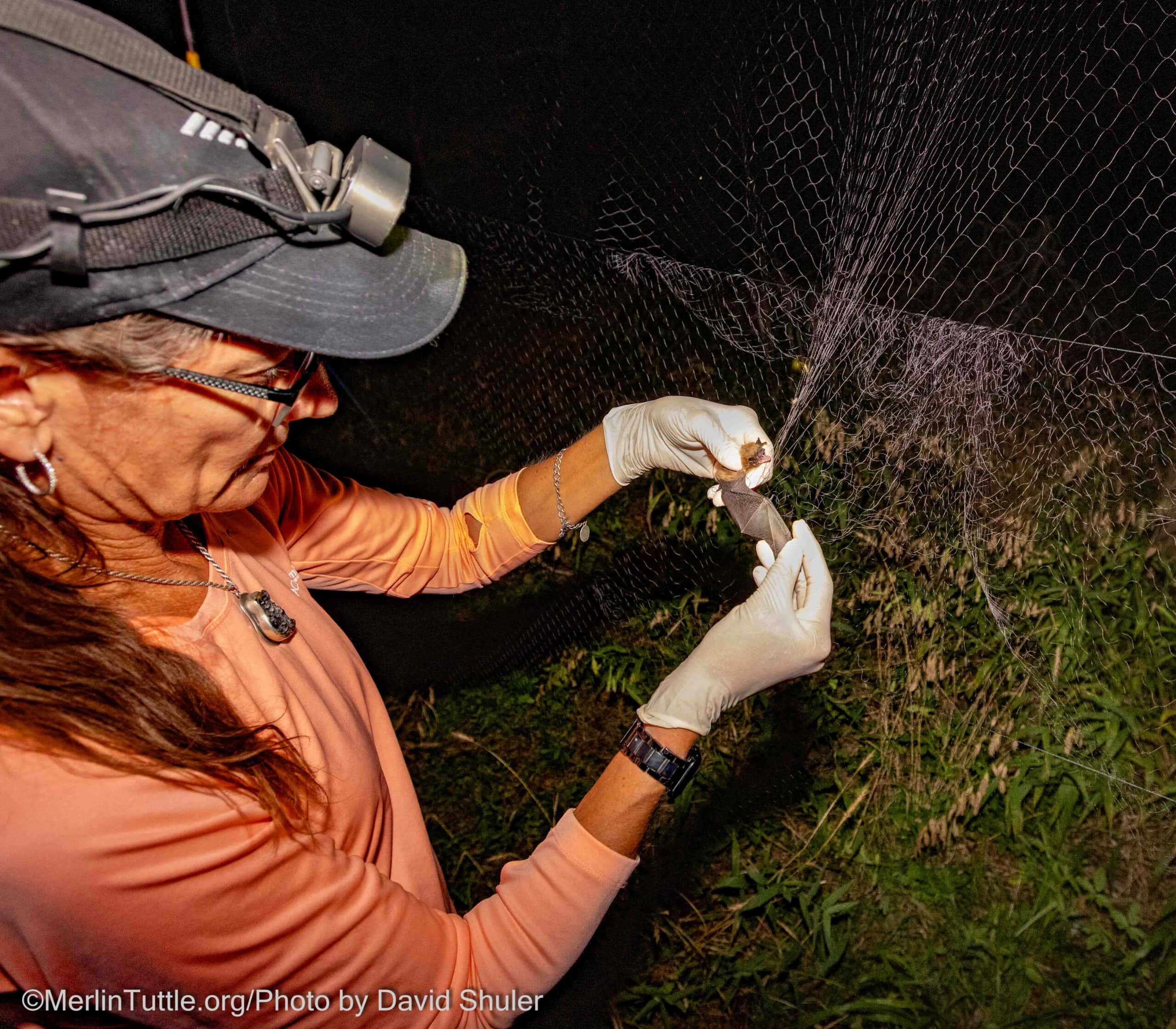
Janet Tyburec removing an evening bat (Nycticeius humeralis) from mist net.
Janet Tyburec teaching mist net setup.
Melissa Donnelly teaching mist net setup.
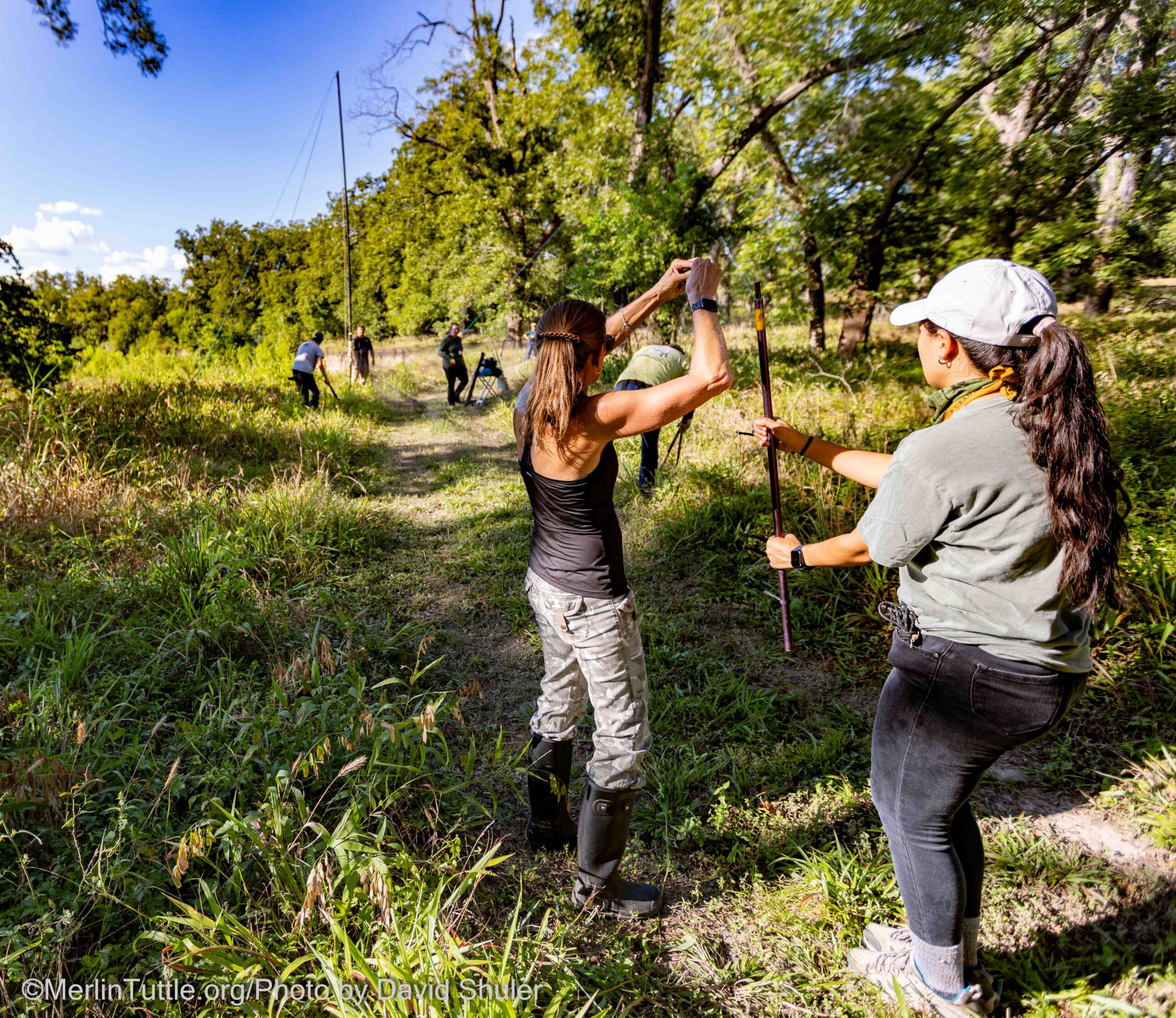
Setting up mist nets.
Janet Tyburec (right) teaching survey techniques to workshop participants.
Participants also observed several research projects underway, including our guano collection beneath occupied bat houses for DNA analysis, documenting consumption of orchard pests. Sampling has now expanded to farms across Texas and Oklahoma, where DNA barcoding reveals which insects bats are consuming and helps estimate bat impact on orchard pests.
As the increase of extreme droughts, floods, and subsequent economic losses continue to challenge traditional farming practices, more producers are turning to bats and other non-traditional aids. Additionally, farmers across the country are recognizing the urgent need to reduce pesticide use and are increasingly integrating bats as a valuable tool in pest management.
The results are already tangible. For the first time ever, Troy Swift did not spray pesticides on his orchard. While pecan nut casebearers were still present this season, they caused only an 11% crop loss—the amount farmers often aim for in “crop load management.” This natural approach reduces tree strain and reportedly improves the quality of the remaining nuts.
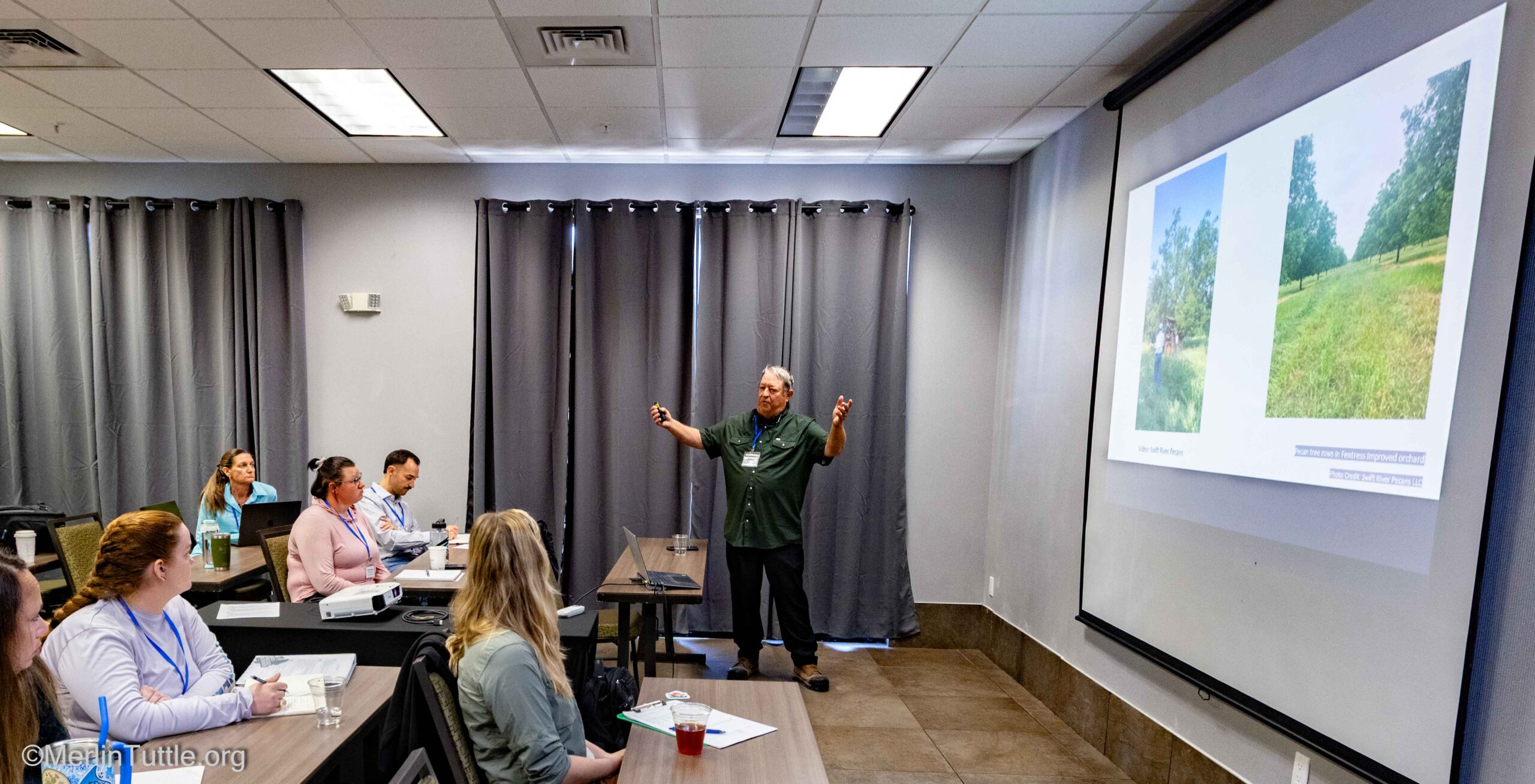
Troy Swift leading a workshop lecture.
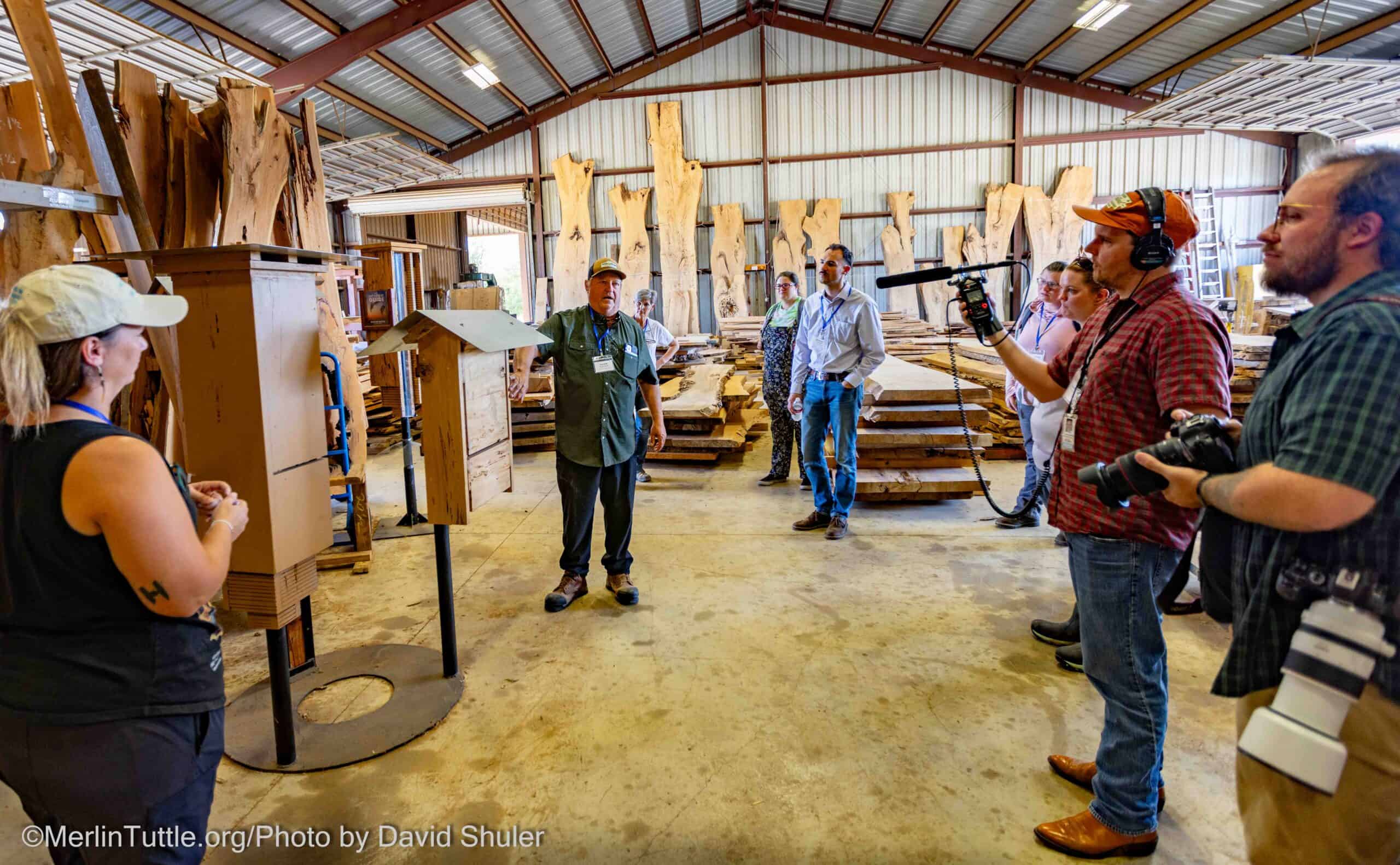
Troy Swift highlighting features of his bat houses. The metal roof and inch-thick wood will help it stand up to the sweltering Texas heat.
Thanks to our long-term collaboration with Troy Swift and the Noble Research Institute, we have a unique opportunity to demonstrate both the ecological services and economic value of bats. As farmers worldwide face mounting pressure to reduce pesticide use, we’re hoping to provide a model for integrating bats into sustainable farming. Each step brings us closer to a future where bats are recognized not only as fascinating wildlife but as vital partners in healthier, more sustainable agriculture.
Kyle Slusher leading a workshop lecture.
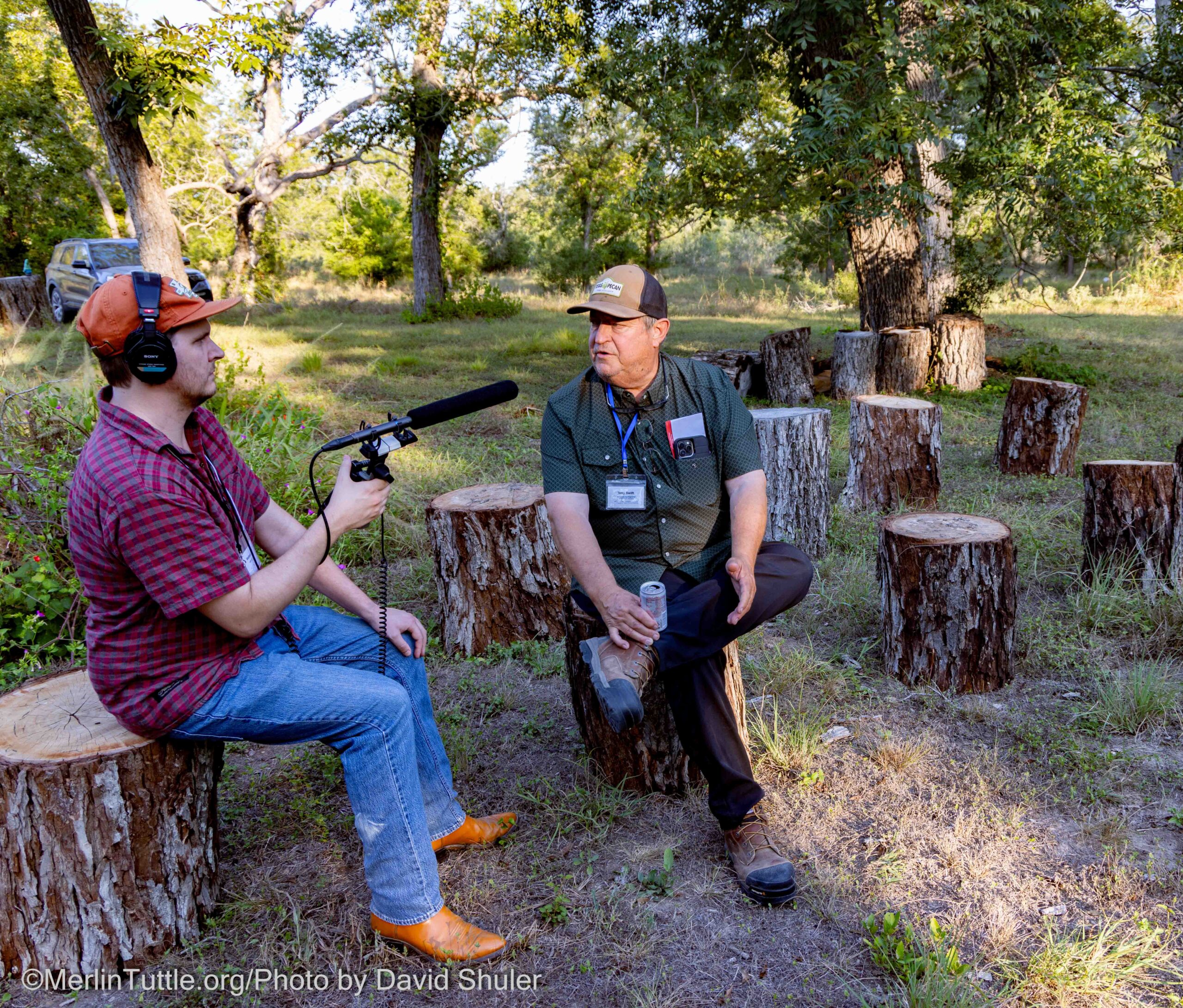
Troy Swift being interviewed during the workshop.
Merlin teaching attendees about the diversity and importance of bats.
Every summer, more than 100,000 people make their way to Austin’s Congress Avenue Bridge to witness one of the world’s greatest urban wildlife spectacles: more
A Disturbing Scene Beneath the Trees During recent heatwaves across southeastern Australia, heartbreaking scenes unfolded in grey-headed flying-fox (Pteropus poliocephalus) colonies. As temperatures soared past
A 40-year-old prediction of “self-perpetuating bat disease hysteria” has been fulfilled.1 Based on my 65 years of experience, I believe it’s time to revise disease-related
When forests are cleared, not all wildlife responds the same way. Some species adapt. Others struggle. Think of how raccoons and coyotes thrive around towns,
Daniel Hargreaves is a lifelong bat conservationist who has worked globally to facilitate progress, including co-founding Trinibats, a non-profit bat conservation organization in Trinidad. He has organized and led field workshops worldwide, including five for MTBC. Following a long and successful career in business, he now manages a network of bat reserves for the Vincent Wildlife Trust in the UK, supervising research and development of new and innovative conservation techniques. Daniel also is one of the world’s premier bat photographers.
Madelline Mathis
Madelline Mathis has a degree in environmental studies from Rollins College and a passion for wildlife conservation. She is an outstanding nature photographer who has worked extensively with Merlin and other MTBC staff studying and photographing bats in Mozambique, Cuba, Costa Rica, and Texas. Following college graduation, she was employed as an environmental specialist for the Florida Department of Environmental Protection. She subsequently founded the Florida chapter of the International DarkSky Association and currently serves on the board of DarkSky Texas. She also serves on the board of Houston Wilderness and was appointed to the Austin Water Resource Community Planning Task Force.
Michael Lazari Karapetian
Michael Lazari Karapetian has over twenty years of investment management experience. He has a degree in business management, is a certified NBA agent, and gained early experience as a money manager for the Bank of America where he established model portfolios for high-net-worth clients. In 2003 he founded Lazari Capital Management, Inc. and Lazari Asset Management, Inc. He is President and CIO of both and manages over a half a billion in assets. In his personal time he champions philanthropic causes. He serves on the board of Moravian College and has a strong affinity for wildlife, both funding and volunteering on behalf of endangered species.