
Batty Gifts for Bat Fans
Are you looking for gifts that delight bat lovers while supporting conservation and education? From beautifully illustrated picture books for young readers to behind-the-scenes storytelling,
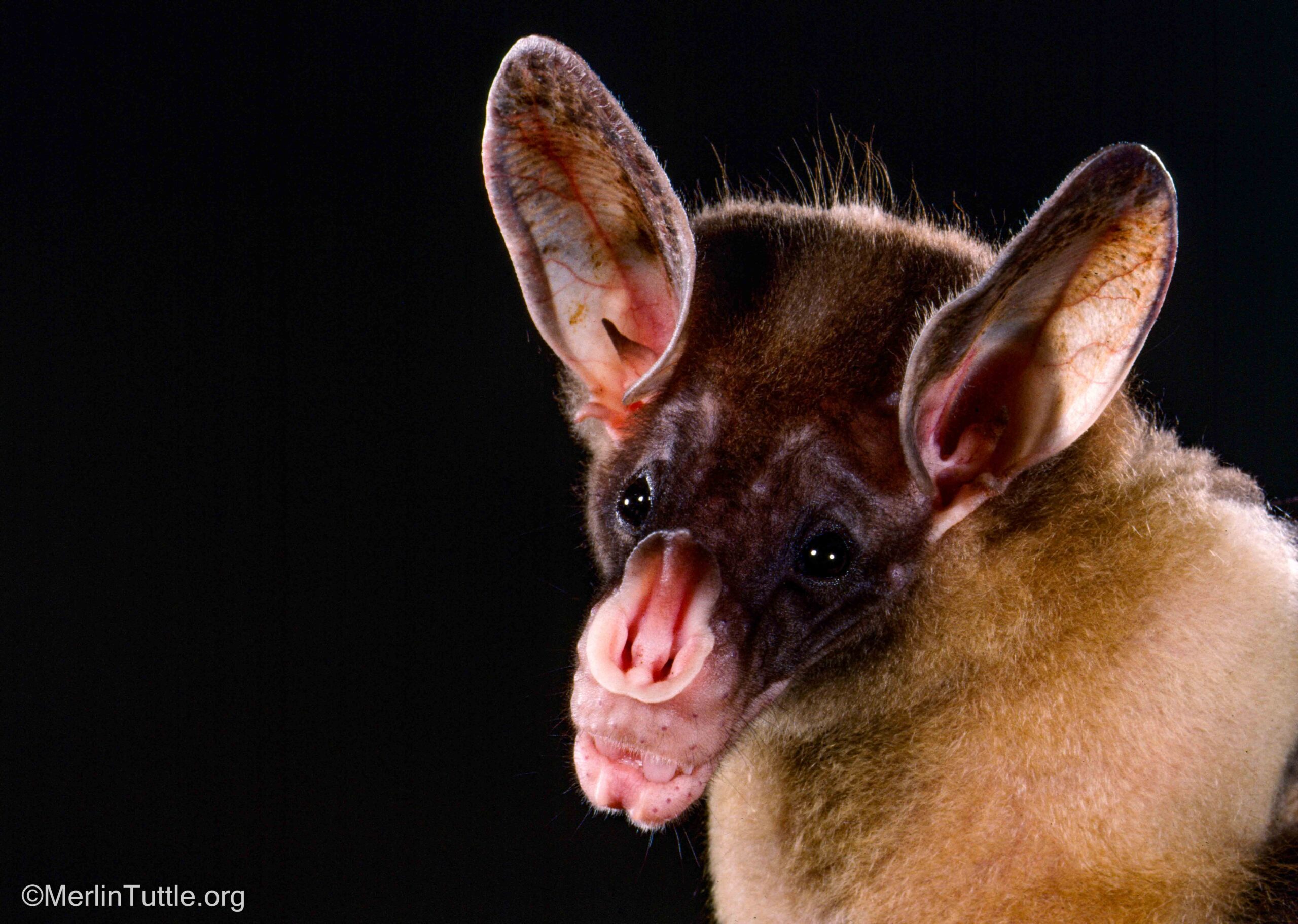
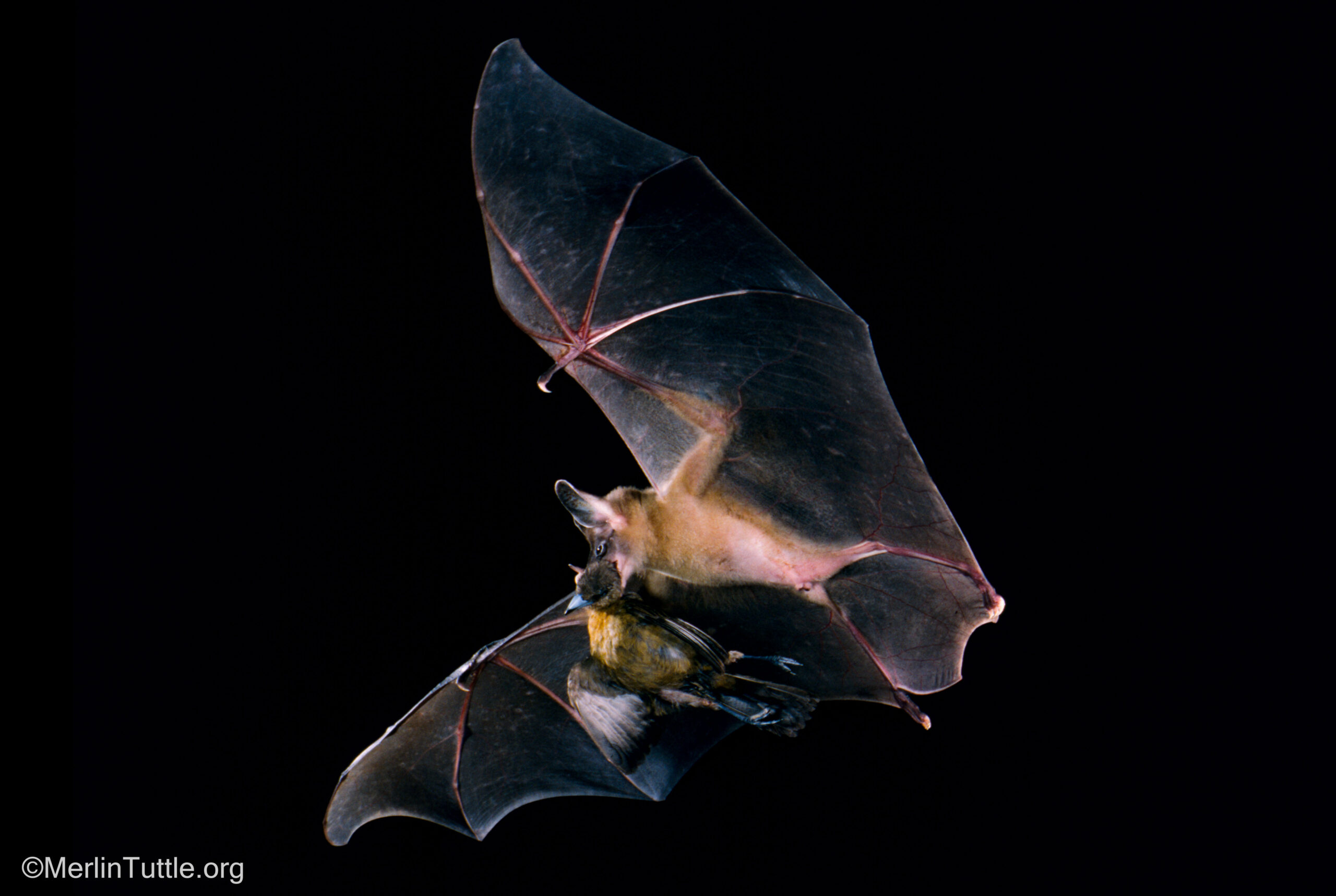
Silent wings. Sharp teeth. A metre-wide wingspan cutting through the tropical night. The spectral bat (Vampyrum spectrum) is the largest carnivorous bat in the Americas — built to catch birds, rodents, and even other bats. Yet, research and video evidence, published in PLOS One, shows these formidable hunters also live in tight family units: cuddling, greeting one another, sharing meals, even playing.
What researchers recorded
Spectral bats occur throughout much of the Neotropical region, from southern Mexico down through South America. In this study, researchers set an infrared camera within a partially hollow Manilkara chicle tree in the dry tropical forest of Guanacaste, Costa Rica, and monitored a single roosting group over months. The site housed four spectral bats — interpreted as a socially monogamous pair, plus two young — and yielded hundreds of recordings that revealed surprisingly rich social behavior.
From roughly 502 videos collected, the team identified 73 clips showing social interactions or other interesting activity. They classified behaviors into categories including social roosting, greeting, bringing prey into the roost, feeding, prey-provisioning, food checks, play, and synchronized departures/returns. These observations are the first published record of prey-provision and related social behaviors of spectral bats in the wild.
Behaviors that surprised the researchers
Why this matters for conservation
Seeing the Spectral Bat Differently
Vampyrum spectrum is both a top-level predator and a family-oriented mammal. This study provides the first robust documentation of prey-provisioning and a suite of social behaviors in the wild, revealing complexity we didn’t expect from a species so often portrayed as solitary. Seeing this kind of affectionate behavior reminds us: bats are complex, social, and interesting beings in their own right. The more we understand about bat behavior and social systems, the better we can design protections. If we only imagine these animals as lone hunters, we might miss the importance of a safe, shared roost, or how disturbance of a family unit might affect the next generation. Recognizing their social lives helps us craft better, more compassionate conservation strategies.
This additional video, submitted by Daniel Hargreaves, provides valuable insight into the social behavior and parental investment of spectral bats. Filmed during a 2016 Trinibats field expedition, the footage comes from a roost discovered in 2015 and monitored over two years, which was home to six individuals — three adults, two juveniles, and one pup. In this clip, a large adult female spectral bat, recognizable by her missing eye, returns to the roost carrying prey, including a partially eaten rodent, which she shares with her young. This behavior highlights maternal care, food sharing, and cooperative family dynamics in one of the world’s largest carnivorous bat species.
Love our content? Support us by sharing it!
Are you looking for gifts that delight bat lovers while supporting conservation and education? From beautifully illustrated picture books for young readers to behind-the-scenes storytelling,
Bats are often misunderstood, but a new book is helping change that. In The Genius Bat: The Secret Life of the Only Flying Mammal, neuroscientist
Our fourth annual Join the Nightlife workshop, held in Central Texas, brought together conservationists, researchers, and farmers from around the U.S. to explore the many
Bats are the longest-lived mammals for their size, with species like the little brown bat (Myotis lucifugus) surviving over 30 years in the wild. Even
Daniel Hargreaves is a lifelong bat conservationist who has worked globally to facilitate progress, including co-founding Trinibats, a non-profit bat conservation organization in Trinidad. He has organized and led field workshops worldwide, including five for MTBC. Following a long and successful career in business, he now manages a network of bat reserves for the Vincent Wildlife Trust in the UK, supervising research and development of new and innovative conservation techniques. Daniel also is one of the world’s premier bat photographers.
Madelline Mathis has a degree in environmental studies from Rollins College and a passion for wildlife conservation. She is an outstanding nature photographer who has worked extensively with Merlin and other MTBC staff studying and photographing bats in Mozambique, Cuba, Costa Rica, and Texas. Following college graduation, she was employed as an environmental specialist for the Florida Department of Environmental Protection. She subsequently founded the Florida chapter of the International DarkSky Association and currently serves on the board of DarkSky Texas. She also serves on the board of Houston Wilderness and was appointed to the Austin Water Resource Community Planning Task Force.
Michael Lazari Karapetian has over twenty years of investment management experience. He has a degree in business management, is a certified NBA agent, and gained early experience as a money manager for the Bank of America where he established model portfolios for high-net-worth clients. In 2003 he founded Lazari Capital Management, Inc. and Lazari Asset Management, Inc. He is President and CIO of both and manages over a half a billion in assets. In his personal time he champions philanthropic causes. He serves on the board of Moravian College and has a strong affinity for wildlife, both funding and volunteering on behalf of endangered species.