Bundled in winter gear deep inside Mammoth Cave during a Kentucky heat wave, I stepped into one of North America’s most historically important bat hibernation caves. Unfortunately, the bats we see today represent only a small fraction of this cave’s extraordinary past numbers. Roost stains preserved on its walls indicate that millions of bats once gathered here each winter to hibernate, mostly the now federally endangered Indiana (Myotis sodalis) and gray (Myotis grisescens) bats. Prior to the arrival of modern humans, these bats may have rivaled the famous, but now extinct passenger pigeon. I came to Mammoth Cave National Park to participate in a workshop organized byBat Conservation and Management (BCM) in collaboration with park staff. After 15 years of working with bats, I wasn’t there simply to learn how to capture or identify them. I was there for a rare opportunity: to learn to recognize the most historically important bat caves from someone with decades of experience.
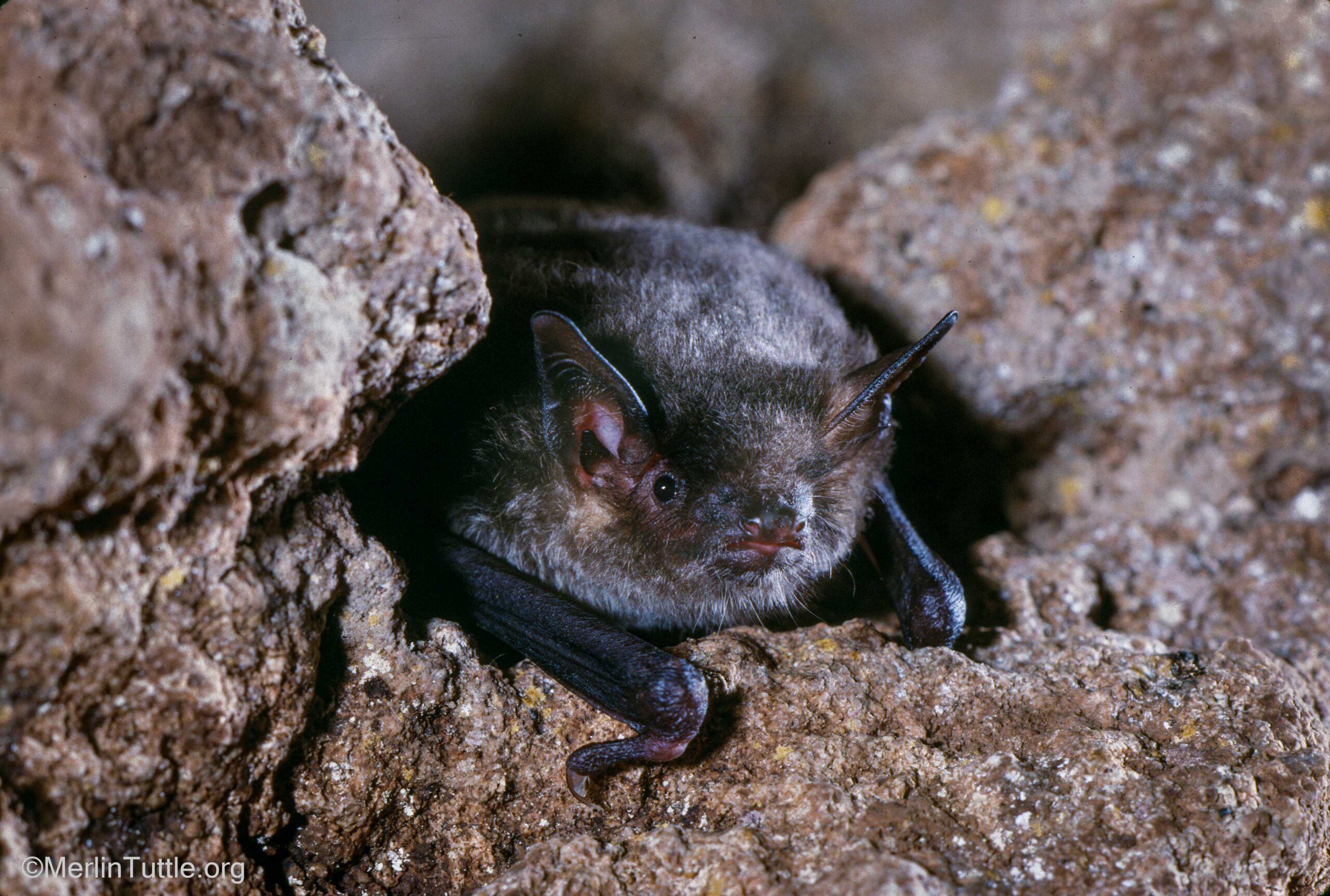
A gray myotis (Myotis grisescens) roosting in a Tennessee cave.
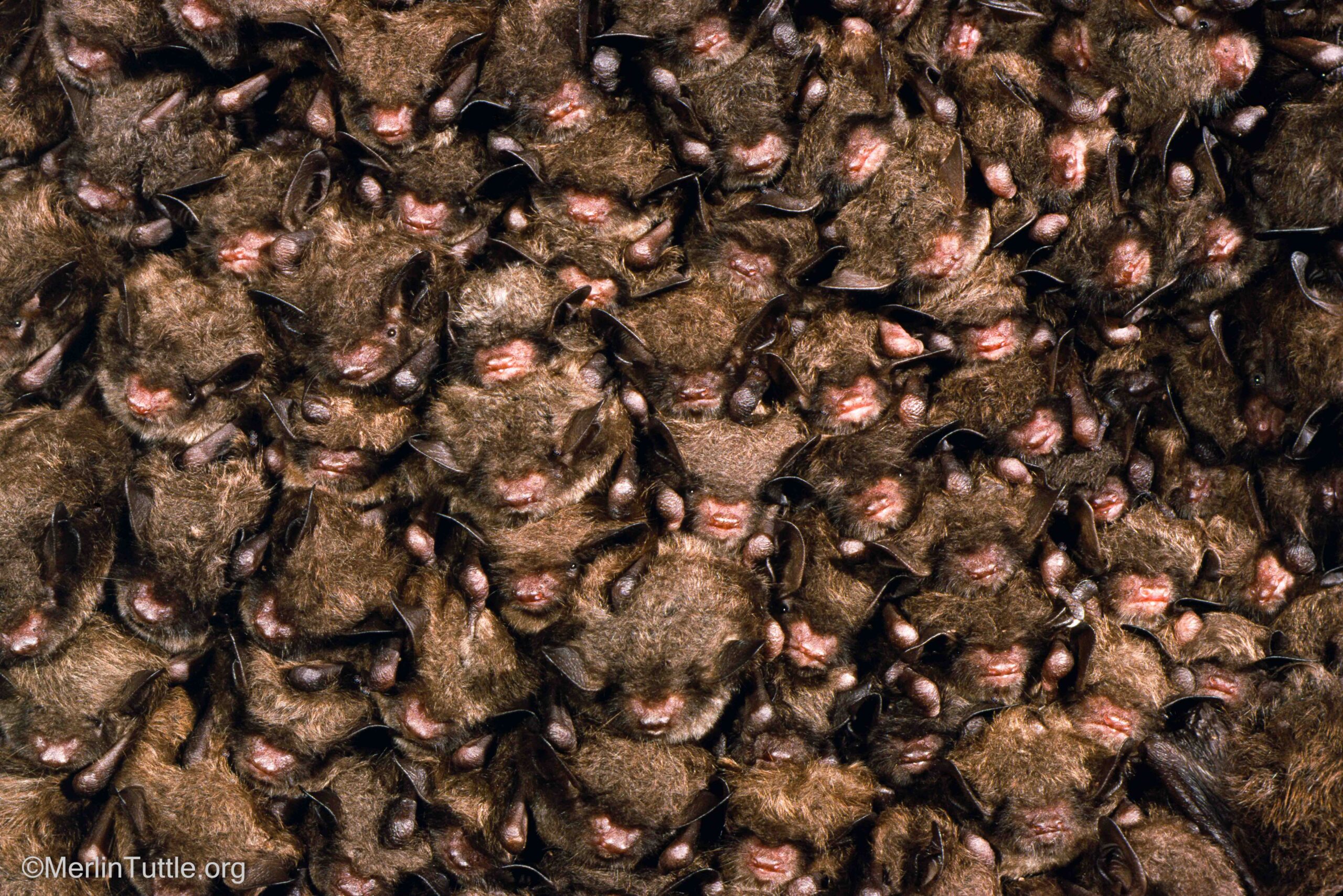
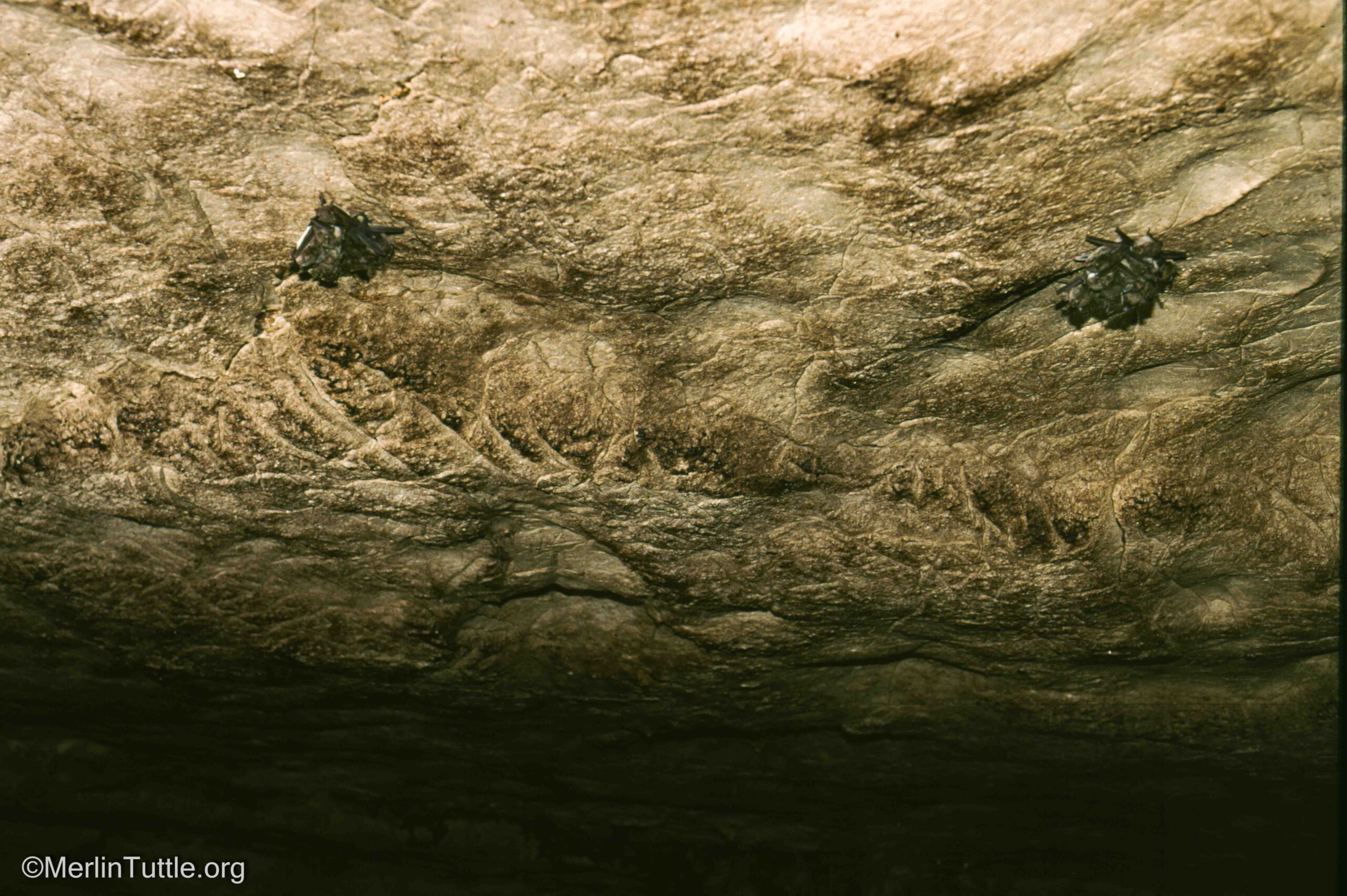
A tightly packed cluster of endangered Indiana myotis (Myotis sodalis) hibernating in a Kentucky cave. With just their faces and wrists exposed, they can pack in at more than 300 per square foot.
Merlin Tuttle’s 65 years of experience came from watching bat populations respond to protection, disturbance, habitat alteration, and restoration — sometimes in unexpected ways. His presentation, Recognizing Important Bat Caves, was about more than identifying good habitat. It was an opportunity to pass on lessons that took a lifetime to learn: finding bats in a cave does not necessarily mean we have found a good habitat. As research becomes increasingly specialized and technology-driven, recognizing evidence of historically important bat caves, once passed directly between generations of bat biologists, is at risk of becoming a lost art.
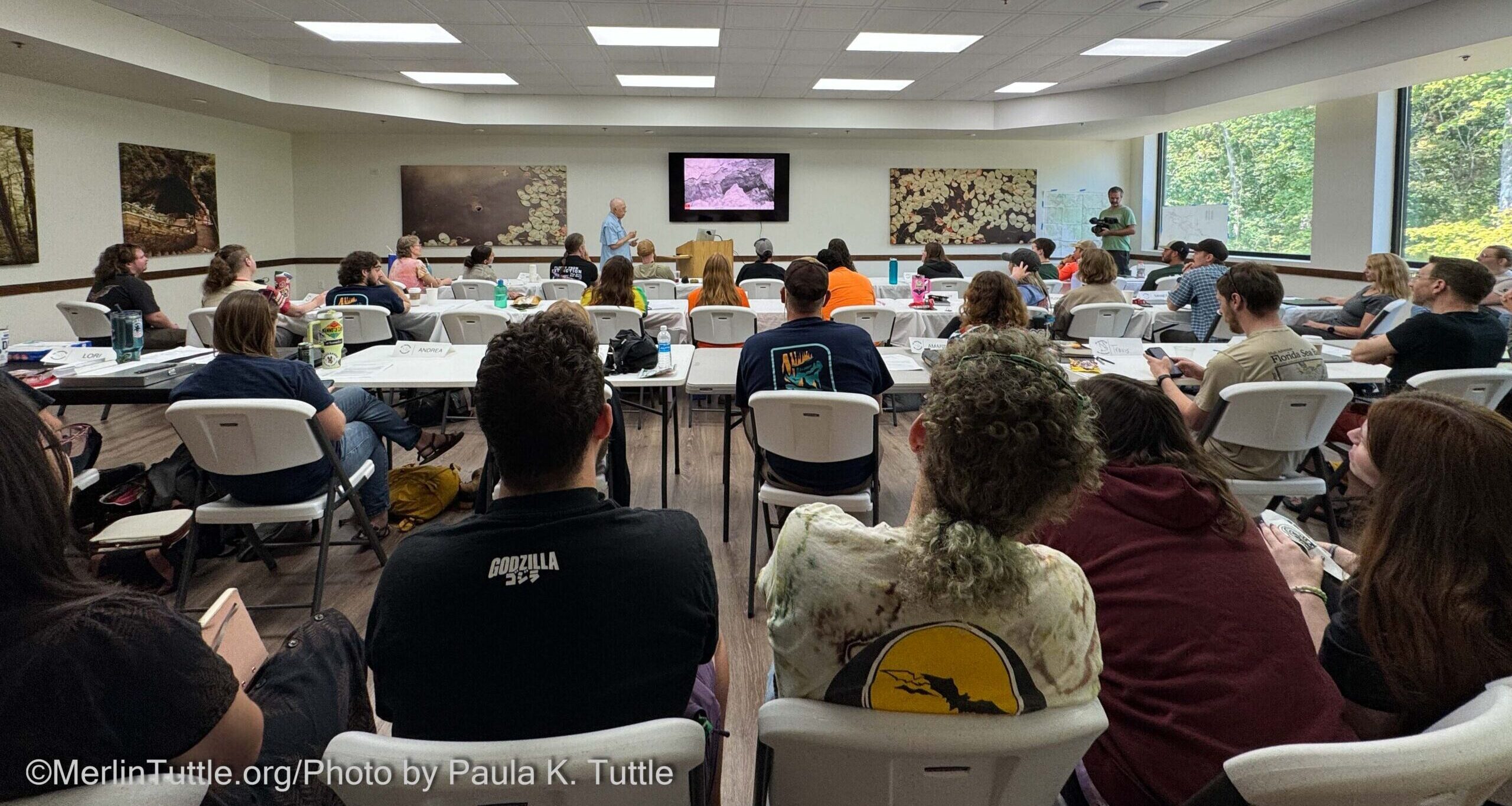
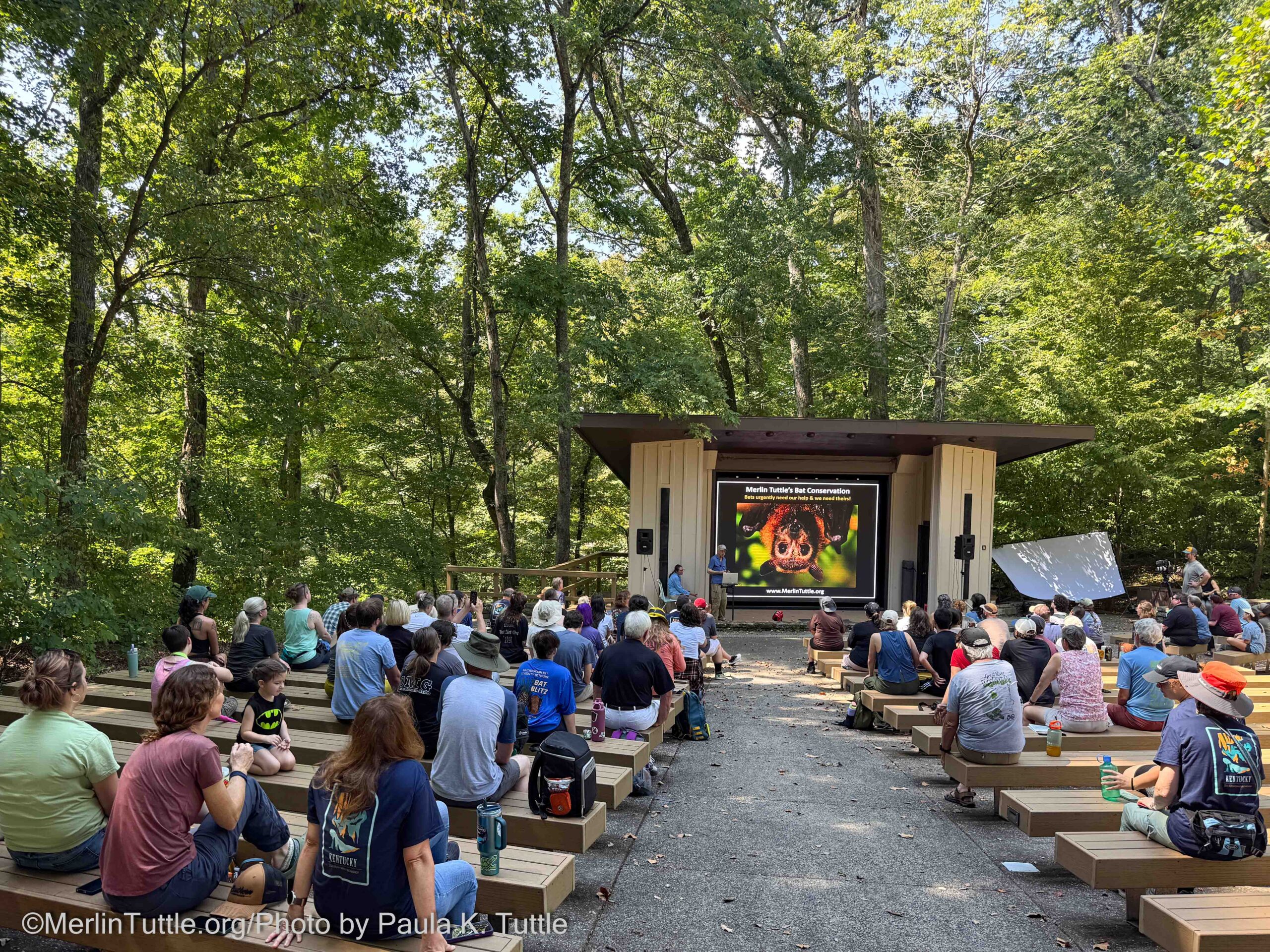
Merlin presenting to Mammoth Cave Workshop participants.
The Importance of Reading Bat History Written on Cave Walls
No two caves are alike, and they can change over time. Temperature, airflow, humidity, space, and protection determine their suitability for bats. Bats are especially impacted by changes at cave entrances. Many caves have been altered for human use, often in ways that are incompatible with bat needs. Fortunately, many opportunities exist for restoring conditions needed by bats. Seemingly small changes can dramatically alter a cave’s suitability. Some caves that today support few or even no bats have the potential to shelter hundreds of thousands. Often all that is needed is a little trimming of vegetation, or restoration of a cave’s original airflow.
Merlin reported examples where merely trimming encroaching vegetation enabled dramatic recolonization. He also reported recovery of hundreds of thousands of gray bats following removal of a concrete wall restricting airflow at Long Cave in Mammoth Cave National Park. When natural airflow returned, the bat population began to recover and is still growing 25 years later. Today, such examples testify to the importance of recognizing historic evidence.
It helps to understand bat needs. Altering airflow can dramatically impact temperatures essential to bat survival.A cave without bats, or with only a small number today, may once have supported an enormous colony. Fortunately, bats leave clues to historic use in the form of roost stains. By understanding bat needs, and how differing cave size and structure can meet them, it’s not too late to make major discoveries that enable restoration of millions of bats.
Recognizing Bat Stains
Bats roosting on limestone leave rusty reddish stains from which much can be learned. Bat stains are characteristically darkest on projecting rock surfaces. The most intense staining is usually associated with nursery roosts, typically in domed areas where body heat is most effectively trapped. Areas stained by bats often additionally show etching of the limestone. CO2 from bat breath, mixed with water vapors, becomes mildly acidic and chips away into the limestone, yielding a roughened surface.
By measuring stained areas and multiplying the area covered by the average number of bats that roost in a square foot, it is possible to obtain approximate estimates of past numbers. In North America most colonial bats cluster at densities of 200 to 300 per square foot. Even approximate estimates can be invaluable in justifying restoration and protection efforts. At Mammoth Cave, historic staining helped Merlin and colleagues conservatively estimate that at least 10 million bats once occupied just the relatively small areas they examined. The bats we see today are not necessarily a reliable picture of what a healthy population once looked like. To read the full story, visit:A Mammoth Discovery.
A Bat’s Biological Budget
Why does finding the right cave matter? Merlin compared bat energy budgets to our financial budgets. Costs for travel (migration or to find food), rearing young, surviving winter (hibernation), and emergency reserves all draw from the same account. If our taxes increase, we might eat out less or postpone a vacation to compensate — but eventually there is nowhere left to cut. Bats face the same constraints. If a bat is forced to use a hibernation cave of inappropriate temperature, or where it is too often disturbed, it burns extra energy from stored fat, so it may starve before spring. It may be able to compensate by finding a summer roost located where it can save energy by traveling less between summer and winter caves or to reach feeding areas. Alternatively, it may have to find a better feeding location. Merlin emphasized that survival in a cave that is frequently disturbed, or where roosts are stressfully warm or cold, should never be misinterpreted as meaning that disturbance or inappropriate temperature isn’t costly. He provided an outstanding example from his own experience.
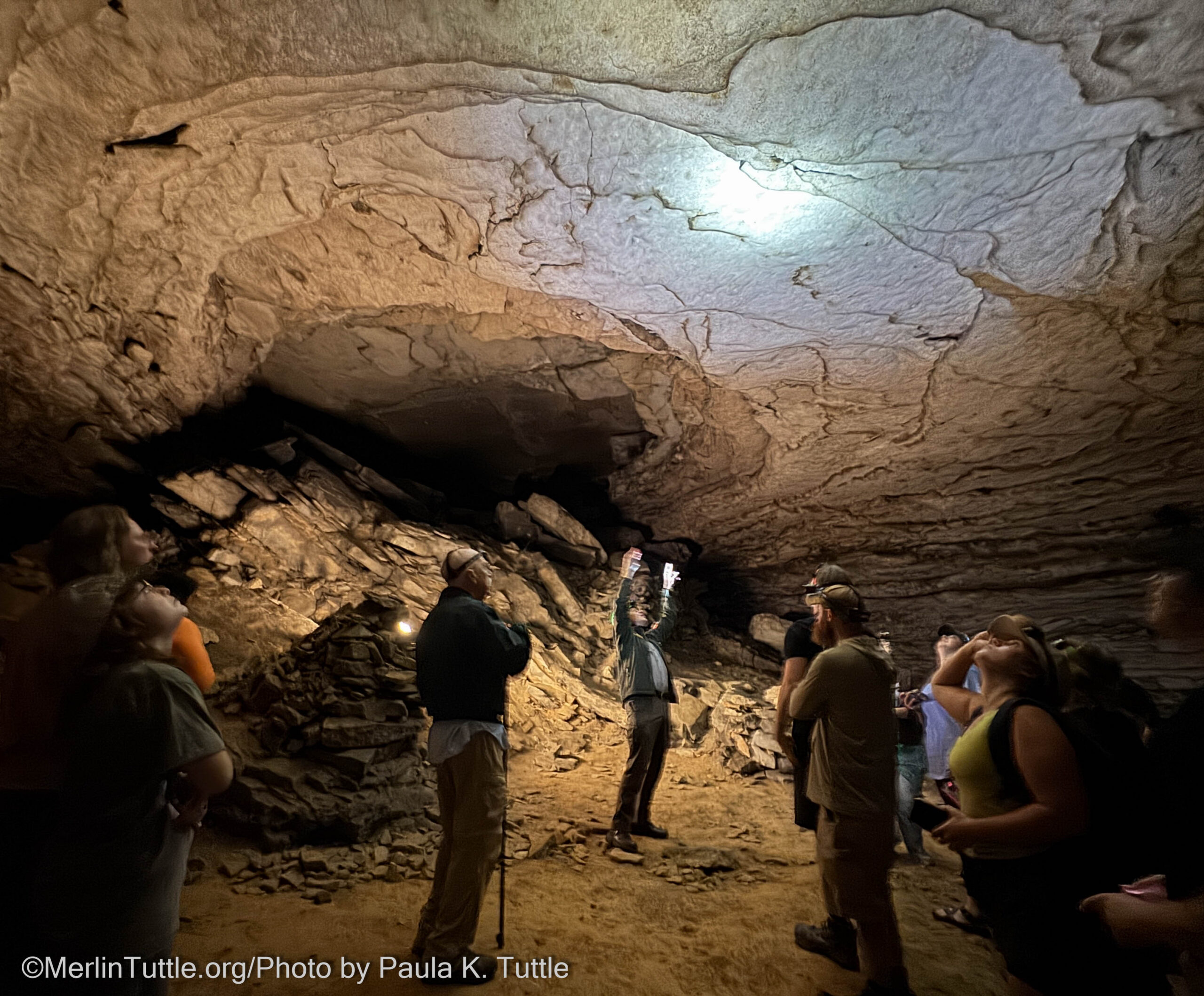
Rick Toomey, cave resource management specialist and research coordinator at Mammoth Cave National Park, and Merlin Tuttle explaining some of the large areas of bat staining in Mammoth Cave to workshop participants.
Some of the stains left by millions of hibernating bats that formerly occupied the Mammoth Cave system. Such stains help biologists estimate past numbers.
Learning from Being Wrong
One of Merlin’s most compelling examples involved his own research. For roughly 30 years, he monitored a Tennessee cave containing 100,000 hibernating gray bats each winter. He believed their relatively warm hibernation location represented their preferred temperature, and that his once per winter visits weren’t causing a problem. Eventually, the cave was gated and left undisturbed for 12 years. When Merlin returned, with Fish and Wildlife service bat biologist Bob Currie, they found approximately 300,000 bats, most occupying a much colder area closer to the entrance. Merlin realized that his own repeated visits had influenced where the bats roosted. When undisturbed, they moved to lower temperatures nearer the entrance where they apparently saved so much energy that the population was able to triple in size. That admission was one of the most valuable moments of his presentation. Conservation advances when we are willing to reconsider assumptions — including our own — and change management when evidence points us in a better direction.
Conservation People can See for Themselves
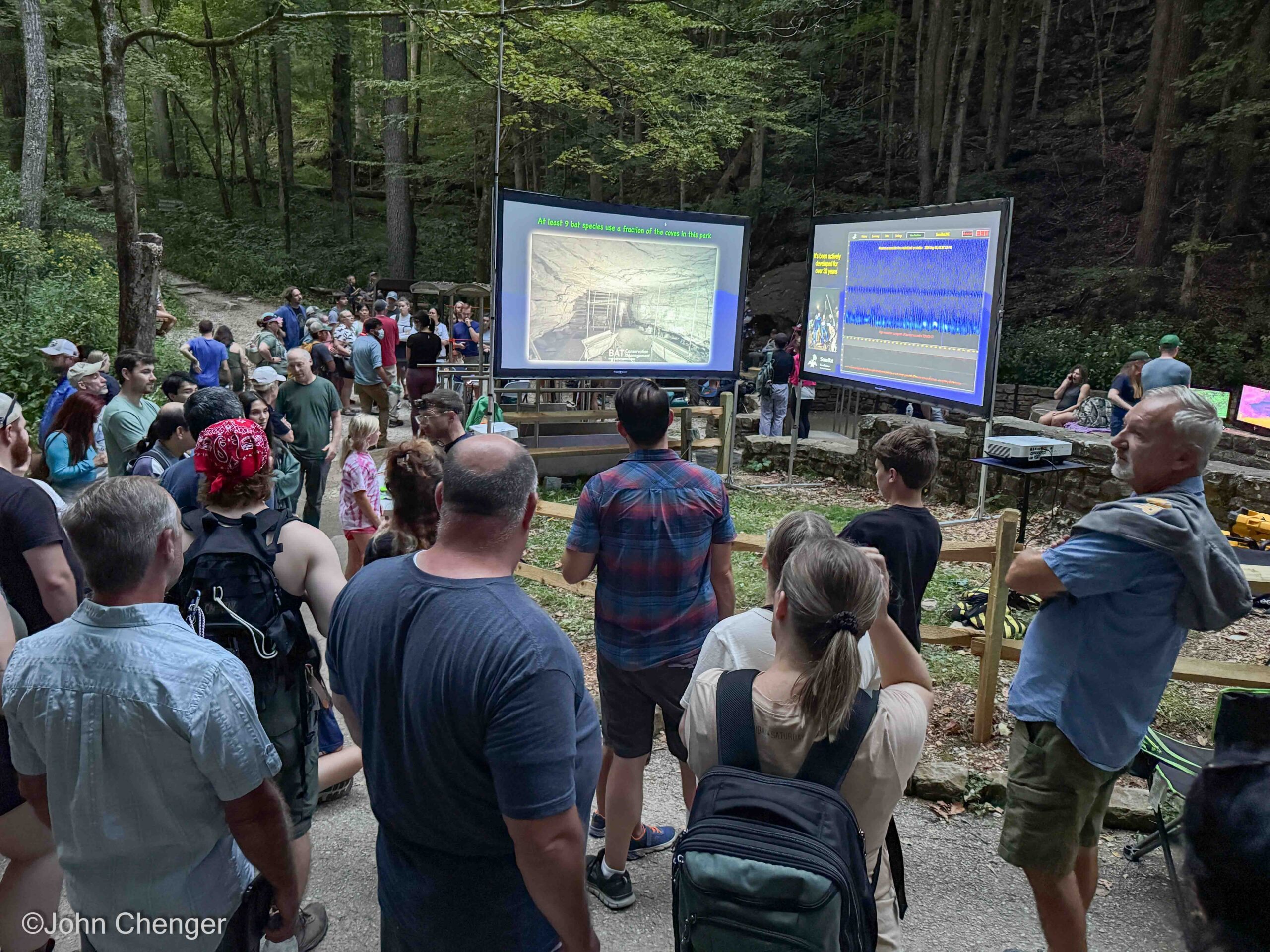
We were encouraged to see an estimated 1,800 people show up to participate in the national park’sBat Day event, including visitors from outside Kentucky. Many were proudly dressed in bat-themed clothing, demonstrating another part of the conservation equation: people protect what they understand and value. Educational booths highlighted bat biology and research, while two large screens brought bat science to life. One screen displayed echolocation calls from released bats and the other a live infrared feed from the harp traps being used to capture bats. Researchers answered questions while processing bats, giving families an engaging glimpse into research without interfering with the professionals conducting it. Attendance might have been even greater had a thunderstorm not ended the evening prematurely. Special thanks go to John and Lori Chenger (BCM), Rick Toomey, Park Cave Specialist, and Chris Clark, Park Guide, who is already planning the next Bat Day for September 4, 2027!
Throughout the week, people approached Merlin with stories of how his talks decades earlier influenced their careers. One woman even recalled her grandfather, a local moonshiner, telling childhood stories about Merlin, whom he simply knew as “the batman.” That lasting impact is worth remembering when writing wildlife policy. In some states, restrictions on live-animal education or public observation of research can make events like Bat Day difficult to reproduce. Such regulations serve important purposes, including protecting endangered species, minimizing disturbance, and safeguarding animal welfare, but policies can have unintended consequences. Mammoth Cave demonstrates that carefully managed public engagement and strong safeguards can coexist. The question is not whether we abandon protections, but whether we can achieve two conservation goals simultaneously: protecting bats today, while inspiring the people who will protect them tomorrow.
Merlin providing public introduction to bats during Bat Day at Mammoth Cave.
Some of the 1,800 visitors to Mammoth Cave Bat Day observing bats being captured for research on one screen, and echolocation calls from the released bats on the other.
Passing on a Disappearing Skill
Technology has transformed bat research, giving us thermal cameras, acoustic detectors, genetic tools, and capabilities earlier generations could scarcely imagine — but it cannot replace field experience. Recognizing old roost staining, understanding cave airflow, and questioning why bats occupy one place rather than another are skills developed through experience and mentorship. That is ultimately why workshops like this matter.
Important hibernacula have undoubtedly been altered, overlooked, or forgotten, some no longer containing enough bats to attract attention. The clues bats left behind — and the caves themselves — can help us find them, but we need people who know how to read those clues and systems that allow them to learn, persevere, and succeed. Effective conservation requires the humility to reconsider old assumptions, the courage to test better approaches, and the willingness to pass hard-earned knowledge on to the next generation. Whether that means teaching a biologist to recognize the faint stain of a long-lost colony, scanning a cold landscape for a promising hibernation cave, or giving a child their first glimpse of bat research, we cannot know where those experiences will lead. If we want to restore the great bat populations of the past, we need to recognize not only where recovery is possible, but the importance of supporting the people who will make it happen.
Chris Clark, park guide and organizer of Bat Day events, leading Merlin Tuttle and workshop participants as they return from viewing bat stains in Mammoth Cave.
Every summer, more than 100,000 people make their way to Austin’s Congress Avenue Bridge to witness one of the world’s greatest urban wildlife spectacles: more
A Disturbing Scene Beneath the Trees During recent heatwaves across southeastern Australia, heartbreaking scenes unfolded in grey-headed flying-fox (Pteropus poliocephalus) colonies. As temperatures soared past
A 40-year-old prediction of “self-perpetuating bat disease hysteria” has been fulfilled.1 Based on my 65 years of experience, I believe it’s time to revise disease-related
When forests are cleared, not all wildlife responds the same way. Some species adapt. Others struggle. Think of how raccoons and coyotes thrive around towns,
Daniel Hargreaves is a lifelong bat conservationist who has worked globally to facilitate progress, including co-founding Trinibats, a non-profit bat conservation organization in Trinidad. He has organized and led field workshops worldwide, including five for MTBC. Following a long and successful career in business, he now manages a network of bat reserves for the Vincent Wildlife Trust in the UK, supervising research and development of new and innovative conservation techniques. Daniel also is one of the world’s premier bat photographers.
Madelline Mathis
Madelline Mathis has a degree in environmental studies from Rollins College and a passion for wildlife conservation. She is an outstanding nature photographer who has worked extensively with Merlin and other MTBC staff studying and photographing bats in Mozambique, Cuba, Costa Rica, and Texas. Following college graduation, she was employed as an environmental specialist for the Florida Department of Environmental Protection. She subsequently founded the Florida chapter of the International DarkSky Association and currently serves on the board of DarkSky Texas. She also serves on the board of Houston Wilderness and was appointed to the Austin Water Resource Community Planning Task Force.
Michael Lazari Karapetian
Michael Lazari Karapetian has over twenty years of investment management experience. He has a degree in business management, is a certified NBA agent, and gained early experience as a money manager for the Bank of America where he established model portfolios for high-net-worth clients. In 2003 he founded Lazari Capital Management, Inc. and Lazari Asset Management, Inc. He is President and CIO of both and manages over a half a billion in assets. In his personal time he champions philanthropic causes. He serves on the board of Moravian College and has a strong affinity for wildlife, both funding and volunteering on behalf of endangered species.