
Bat City Reimagines Austin’s Bat-Watching Experience
Every summer, more than 100,000 people make their way to Austin’s Congress Avenue Bridge to witness one of the world’s greatest urban wildlife spectacles: more
When forests are cleared, not all wildlife responds the same way.
Some species adapt. Others struggle. Think of how raccoons and coyotes thrive around towns, while wolves decline as wild places disappear. Bats follow a similar pattern. The question I wanted to answer is: which species seem to be handling deforestation well (relatively) — and which species seem to be at greater risk, even with seemingly stable population sizes?
At a long-term research site in Belize, I worked with a team to find the winners, the losers, and everyone in between.
But figuring that out isn’t as simple as counting bats. Some populations may look stable while their food sources are shrinking. To really understand how bats cope with deforestation, we needed to know one thing: where are they actually feeding?
Enter: the power of stable isotope analysis!
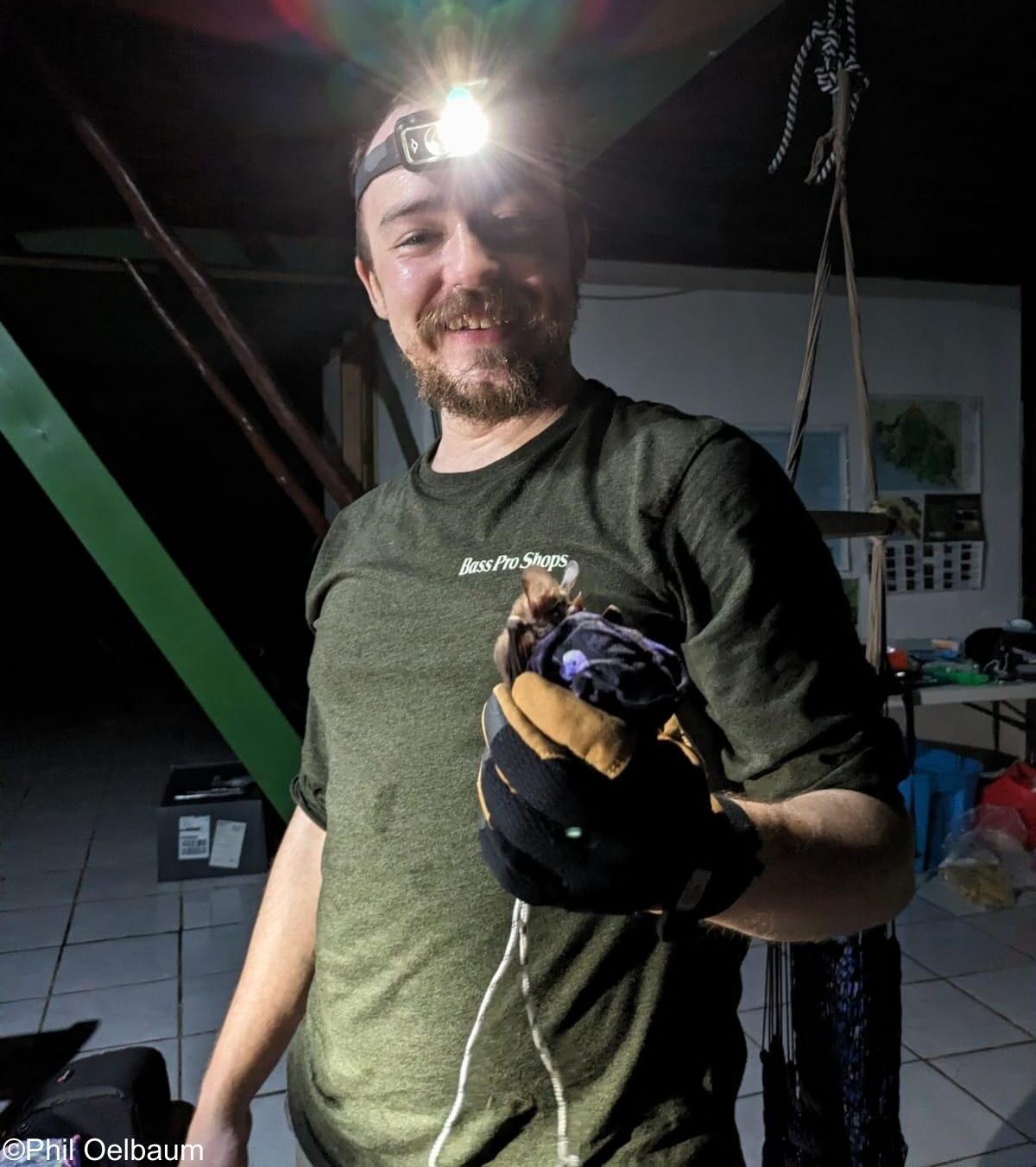
Following the clues in bat hair
Elements can occur as different isotopes — atoms with the same number of protons but different numbers of neutrons. One well-known example is carbon-14, the radioactive isotope used in radiocarbon dating. But many isotopes are stable and long-lasting, and they still behave slightly differently: carbon-13, for instance, is heavier than the more common carbon-12, so processes like photosynthesis tend to favor the lighter form, leaving plant tissues relatively depleted in carbon-13.
Different kinds of plants use slightly different methods to fix carbon from the atmosphere and thus have different ratios of carbon-13 to carbon-12. This was crucial to the study because we needed a way to tell if bats were feeding in the forest or over surrounding agricultural lands — the carbon isotope ratio expected to come from forest plants is very different from certain crops.
When bats eat fruit, nectar, insects, or other prey, they incorporate the carbon from that food into their tissues — even in their fur. By analyzing tiny samples of bat hair, we were able to trace whether their meals came mostly from forest habitats or agricultural land.
In other words, isotopes don’t lie.
Who depends on the forest?
The results were clear.
Fruit- and nectar-feeding bats are getting almost all of their carbon from forest resources. Even when surrounded by farmland, they’re still getting their energy from native fruits and flowers. If forests disappear, their food disappears too.
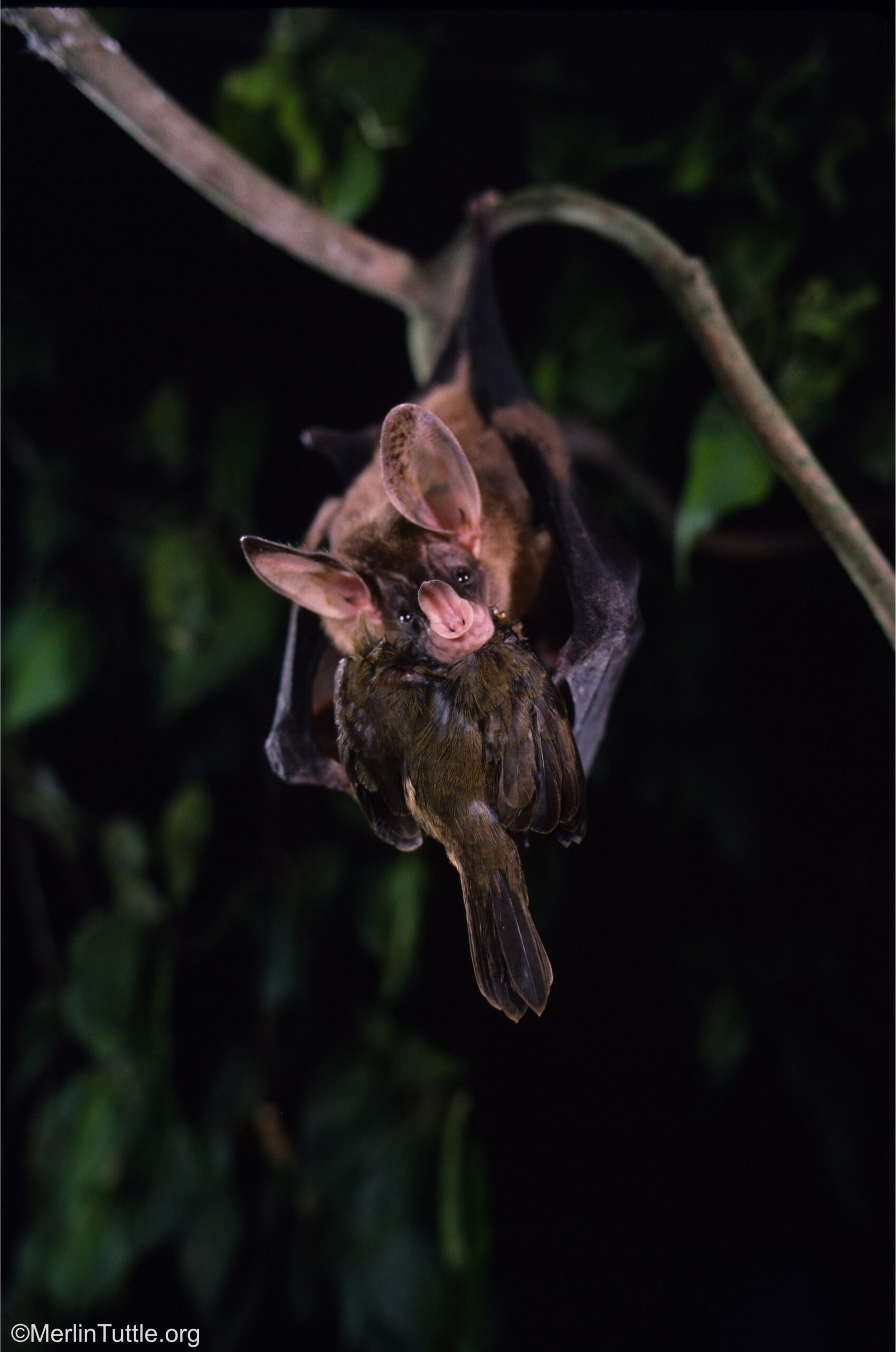
Carnivorous bats told a similar story. Even species like the powerful spectral bat — capable of catching small vertebrates — stayed tied to forest habitats rather than hunting over cropland.
For these bats, intact forests aren’t optional. They’re essential.
Who adapts?
Some species proved more flexible.
Vampire bats, for example, often feed on livestock and seem to get much of their diet from agricultural areas (though 25% of their diet may still be coming from animals in the forest).
Insect-eating bats showed the greatest range of behavior. Not all insect eaters hunt the same way. Some hunt in open air, while others specialize in picking insects off leaves and branches in dense vegetation.
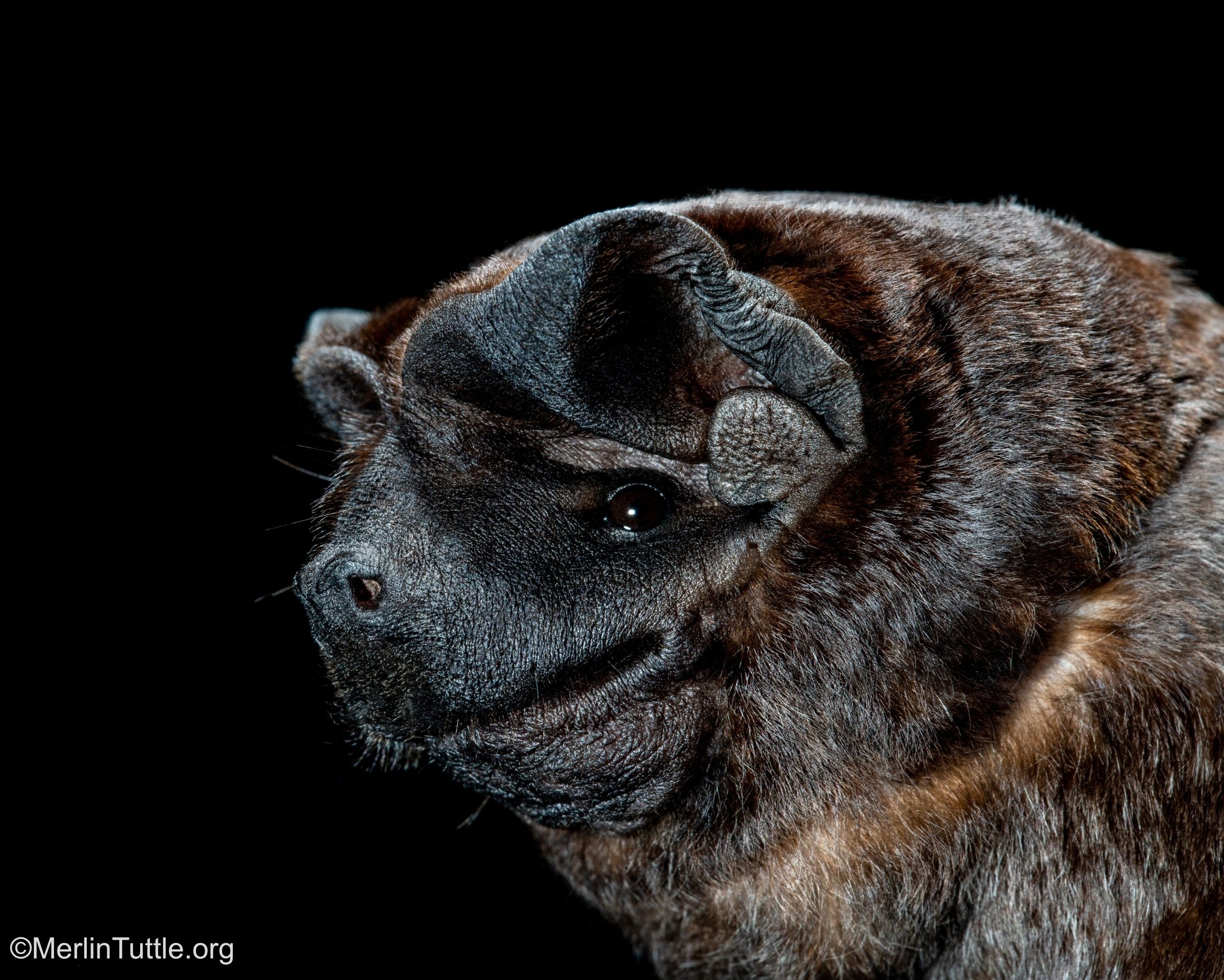
Open-space hunters, like black mastiff bats, appeared to adapt better than most to feeding over fields and farms, with about half their diet coming from agricultural landscapes. But species that forage in cluttered forest habitats — such as big-eared bats — remained strongly dependent on intact woodland.

Why these findings matter
These differences tell us something important.
Deforestation doesn’t affect all bats equally. Some species adapt better than others. And the ones that can’t are often those that pollinate flowers, disperse seeds, and help forests regenerate.
By understanding who depends most on healthy habitat, conservation efforts can focus where they’re needed most — protecting the forests that sustain vulnerable species, while recognizing which bats are already adjusting to human-altered landscapes.
This story isn’t just about losses. It’s also about resilience.
But one thing is clear: if we want thriving bat communities — and healthy ecosystems — forests still matter.
Dr. Ronald Hall got his start working with bats at the University of California, Merced, studying the evolution of sensory and functional morphology in bats. After a predominantly computer-centric two years of research, his first field season was in Belize in 2021. Beyond Belize, he has worked in Costa Rica and Jamaica to collect tissues for stable isotope analysis in order to better understand the ecology of tropical bats and the impact of changing habitats. You can find his doctoral thesis on this study here.
Love our content? Support us by sharing it!
Every summer, more than 100,000 people make their way to Austin’s Congress Avenue Bridge to witness one of the world’s greatest urban wildlife spectacles: more
A Disturbing Scene Beneath the Trees During recent heatwaves across southeastern Australia, heartbreaking scenes unfolded in grey-headed flying-fox (Pteropus poliocephalus) colonies. As temperatures soared past
A 40-year-old prediction of “self-perpetuating bat disease hysteria” has been fulfilled.1 Based on my 65 years of experience, I believe it’s time to revise disease-related
MTBC’s Antoniya Hubancheva Award was established in honor of Antoniya Hubancheva — the recipient of our first student scholarship (thanks to a generous gift from our
Daniel Hargreaves is a lifelong bat conservationist who has worked globally to facilitate progress, including co-founding Trinibats, a non-profit bat conservation organization in Trinidad. He has organized and led field workshops worldwide, including five for MTBC. Following a long and successful career in business, he now manages a network of bat reserves for the Vincent Wildlife Trust in the UK, supervising research and development of new and innovative conservation techniques. Daniel also is one of the world’s premier bat photographers.
Madelline Mathis has a degree in environmental studies from Rollins College and a passion for wildlife conservation. She is an outstanding nature photographer who has worked extensively with Merlin and other MTBC staff studying and photographing bats in Mozambique, Cuba, Costa Rica, and Texas. Following college graduation, she was employed as an environmental specialist for the Florida Department of Environmental Protection. She subsequently founded the Florida chapter of the International DarkSky Association and currently serves on the board of DarkSky Texas. She also serves on the board of Houston Wilderness and was appointed to the Austin Water Resource Community Planning Task Force.
Michael Lazari Karapetian has over twenty years of investment management experience. He has a degree in business management, is a certified NBA agent, and gained early experience as a money manager for the Bank of America where he established model portfolios for high-net-worth clients. In 2003 he founded Lazari Capital Management, Inc. and Lazari Asset Management, Inc. He is President and CIO of both and manages over a half a billion in assets. In his personal time he champions philanthropic causes. He serves on the board of Moravian College and has a strong affinity for wildlife, both funding and volunteering on behalf of endangered species.