
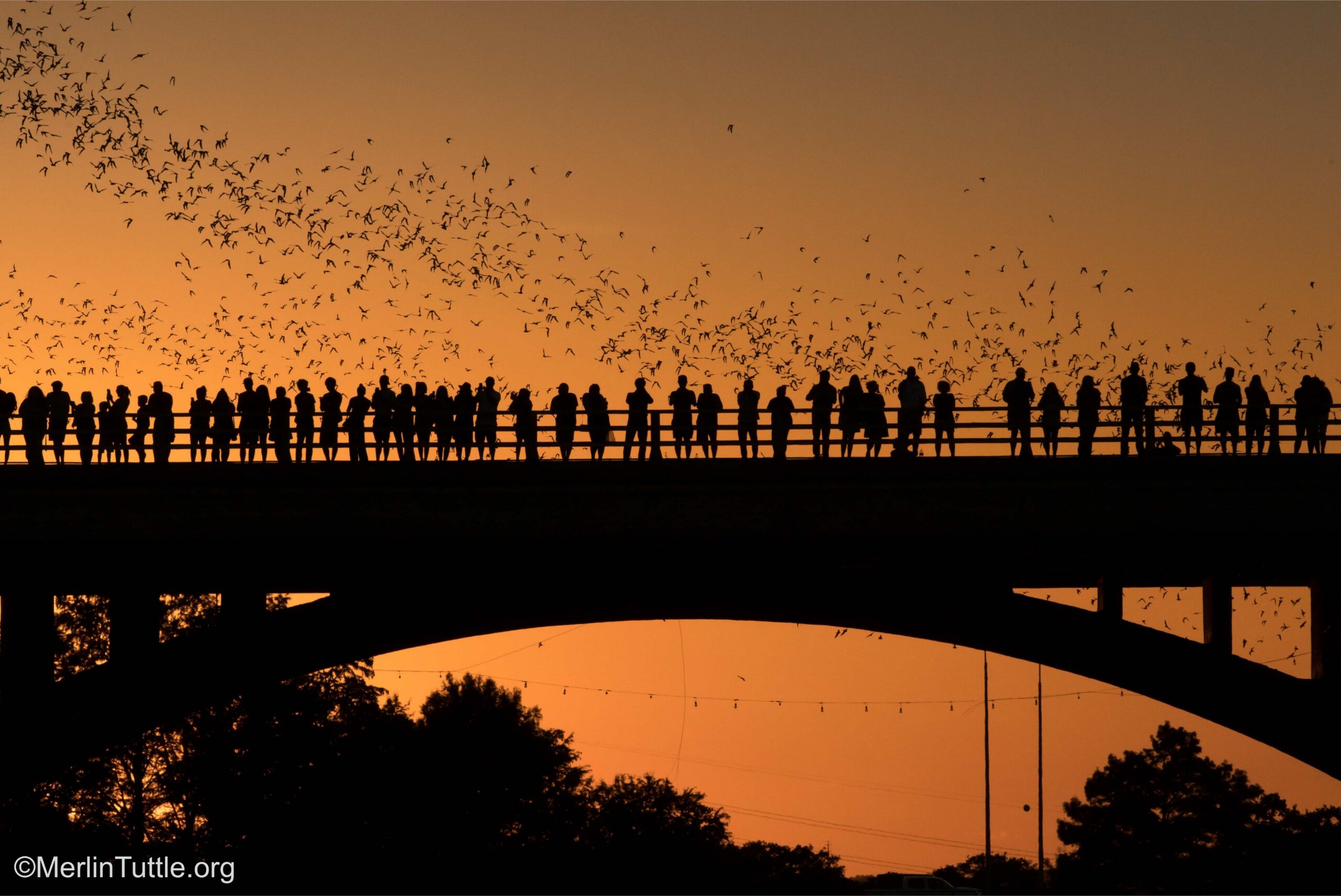
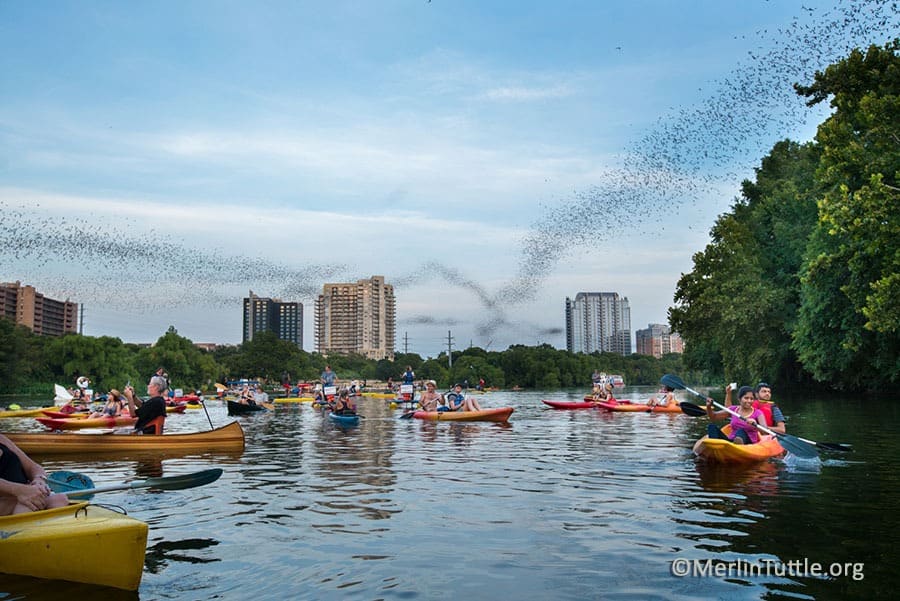
Every summer, more than 100,000 people make their way to Austin’s Congress Avenue Bridge to witness one of the world’s greatest urban wildlife spectacles: more than a million bats emerging from beneath the bridge at dusk.
But while the sight of Austin’s bats is unforgettable, many visitors leave without learning much about the animals they just watched — or why these bats are so important to Austin and beyond.
A new educational project called Bat City hopes to change that.
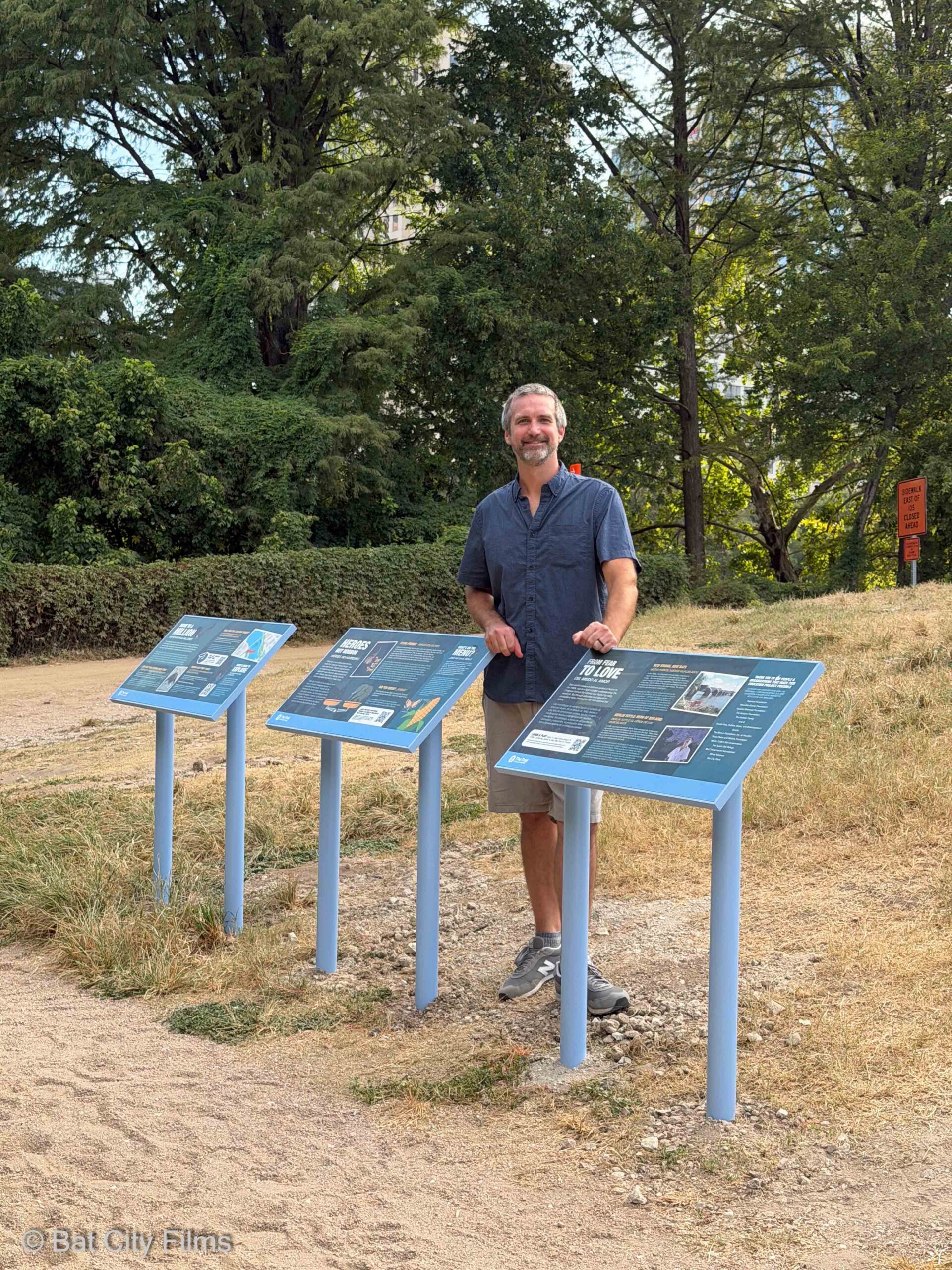
Launching August 26, 2026, Bat City will give visitors new ways to learn about Austin’s bats before, during, and after their visit. The project includes new interpretive signage at the Statesman site featuring QR codes linking to six educational videos, family-friendly activities, online resources, and classroom curriculum designed to bring the bat-watching experience into schools.
The goal is simple: turn a memorable evening watching Austin’s bats into a meaningful introduction to bats and conservation.
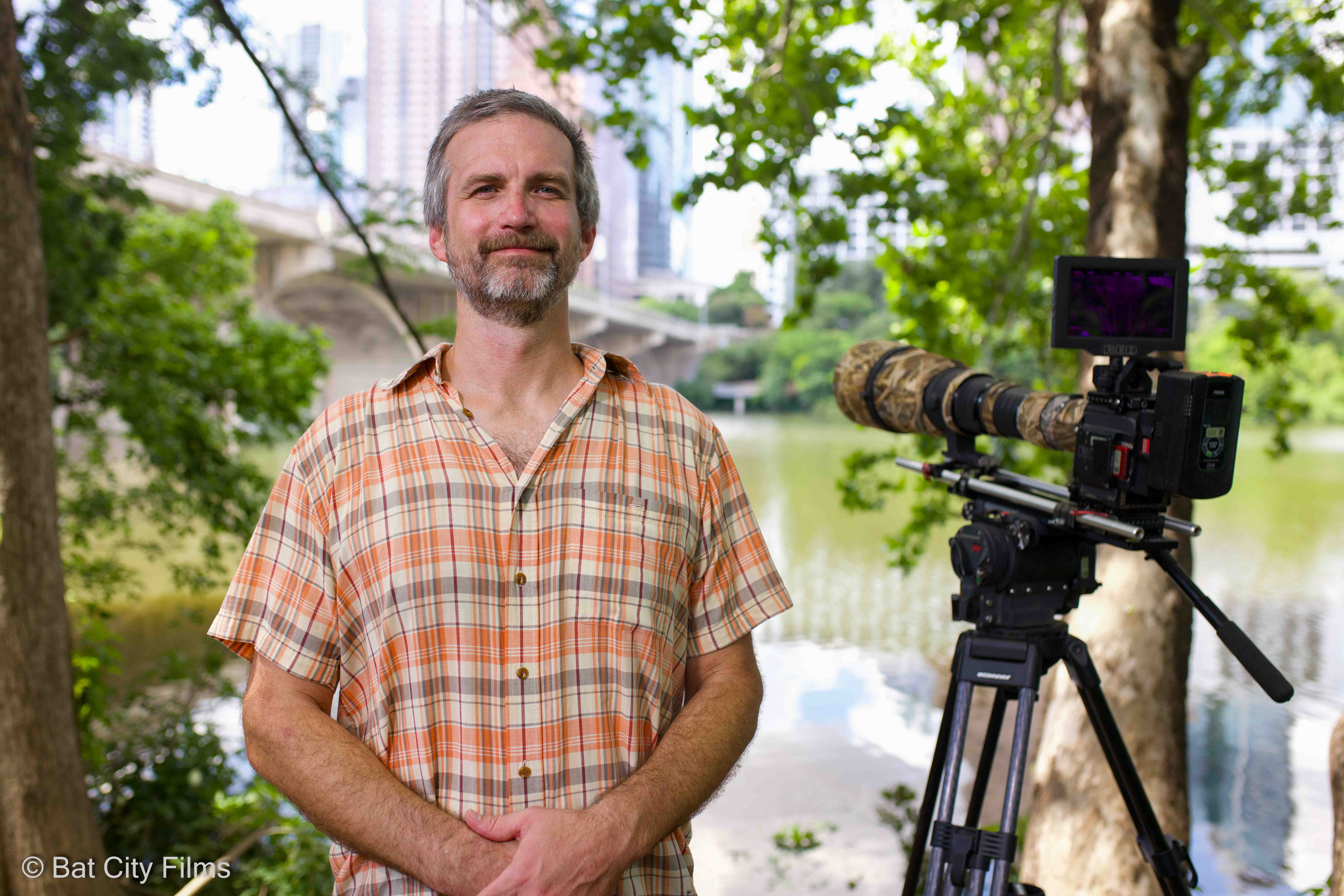
“What I want more than anything is for the city and people of Austin to not take our bats for granted,” said Skip Hobbie, the Austin-based wildlife cinematographer who created Bat City. “This is truly one of the world’s greatest wildlife spectacles that you can witness right in the heart of our city.”
More Than Bat Watching
Bat City’s six videos explore everything from the basics of watching Austin’s bats to the larger conservation story behind them.
One video introduces visitors to bat-watching basics, including the species they are seeing, what to expect when the bats emerge, and how to safely enjoy this natural spectacle. Another addresses what to do if you encounter a bat while tackling common misconceptions about bats and disease and highlighting the work of the Austin Bat Refuge. Additional videos explore the remarkable ecological services bats provide as pest controllers, pollinators, and seed dispersers.
The project also highlights the story of Merlin Tuttle, whose pioneering work saved Austin’s bats and put them on the map. His decades of advocacy have helped shape modern bat conservation.
“I am delighted to count myself a partner in this wonderful new initiative recognizing the vital importance of Austin’s bats, as well as bats globally,” Tuttle said.
Merlin Tuttle’s Bat Conservation (MTBC) partnered with the Bat City project from the beginning. MTBC Science Specialist, Melissa Donnelly, helped fact-check educational materials and worked with Tuttle and Hobbie on scripts, helping ensure that the project’s bat information is well communicated and accurately grounded in science.
For Hobbie, that educational component was long overdue.
“Every time I’ve been out there to film the bats and I’ve got a big professional camera set up, people just gravitate to me with questions,” he said.
The questions, he noticed, were often surprisingly basic: What kind of bats are these? What do they eat? What time will they come out? Which direction will they fly? Do people need to worry about rabies?
“On Saturday nights, the Austin Bat Refuge is usually out there with an informational table, and people who take the time to walk over and talk with them can learn a lot,” Hobbie said. “But for the vast majority of visitors, there’s been no readily accessible information right there to answer those basic questions.”
That gap in education became the inspiration for Bat City.
“People are standing around for sometimes an hour or more waiting to see the bats,” Hobbie said. “They’re all looking at their phones anyway. Let’s give them a chance to learn something while they wait.”
From a Film Idea to a Citywide Project
Bat City grew out of Hobbie’s career as a wildlife cinematographer. Having grown up in Austin, he repeatedly found himself back home filming the city’s bats for major documentary projects, including work for National Geographic and other international productions.
Those assignments changed his relationship with bats.
“As my career took off traveling the world and working on projects for National Geographic and others, the only times I ever got asked to stay at home and film something in Texas was always either stories about Bracken Cave, or our famous bats at the Congress Bridge here in Austin,” he said.
“It’s through filming those places that I really began to take more of an interest, and frankly, become obsessed with bats and how cool and amazing they are.”
Hobbie initially approached Merlin Tuttle in 2023 about developing a larger natural-history film centered on bats and Tuttle’s story. While that project was gaining traction, Hobbie began thinking about what he could create in the meantime.
Rather than make a short film simply to advance his own filmmaking ambitions, he wanted to build something with a lasting public benefit.
“I didn’t want to make a short film that was just completely self-serving for me to go win some awards and tell this story,” he said. “I wanted to develop a project that was meaningful and added something to the world.”
That idea eventually became Bat City.
Three years later, the project has grown through partnership with Merlin Tuttle’s Bat Conservation, including collaboration with a wide variety of other conservation organizations, educators, and filmmakers in Austin.
The Austin Bat Refuge helped with educational content on what to do when injured bats are encountered. Bat Conservation International became a sponsor along with the Texas Parks and Wildlife Foundation (which serves as the project’s fiscal sponsor, allowing donations to flow through the organization without administrative fees). The Trail Conservancy also helped develop and install the new signage and will maintain it going forward. A number of other Austin-area nature, parks, and education organizations have also endorsed the project.
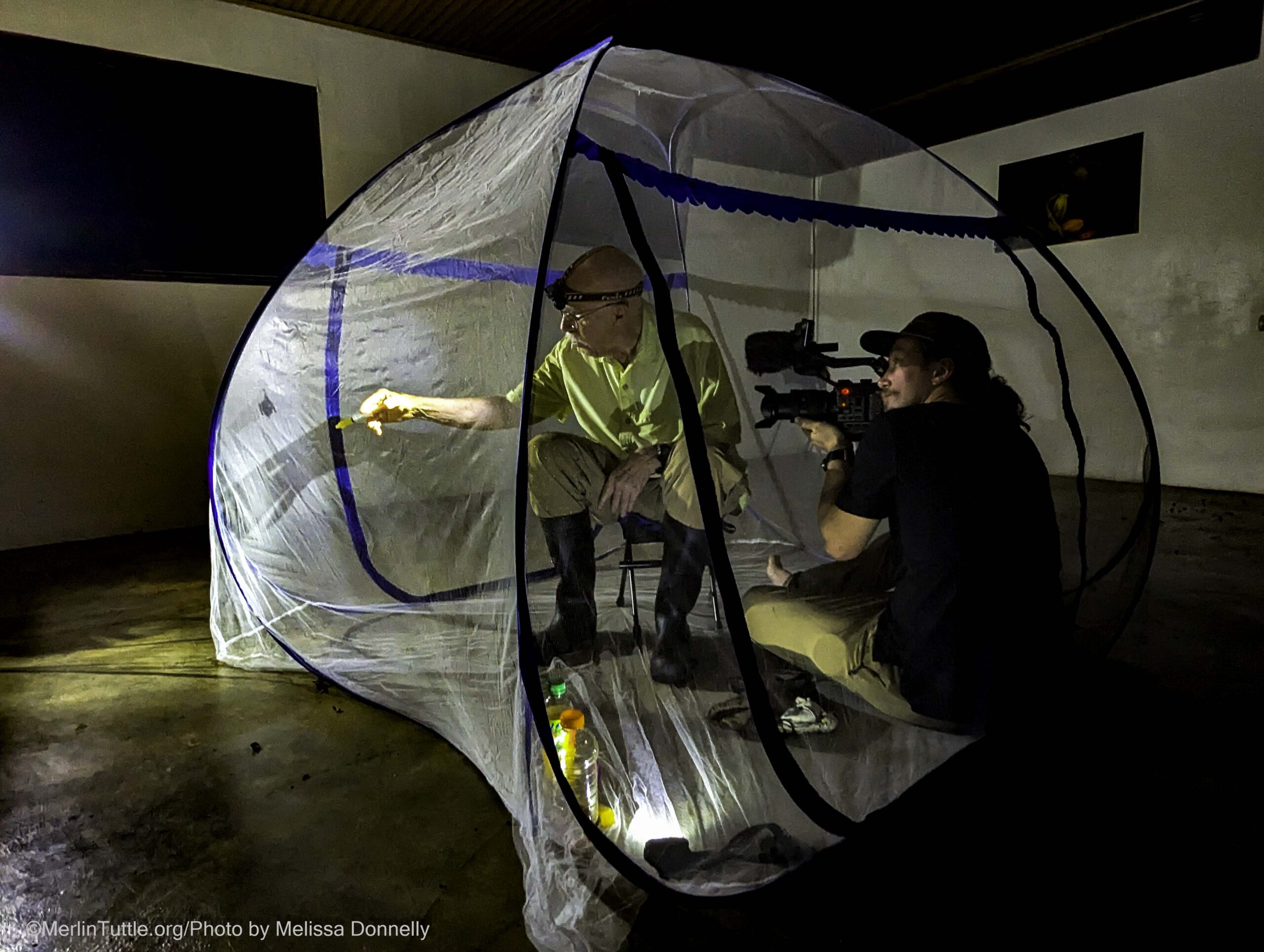
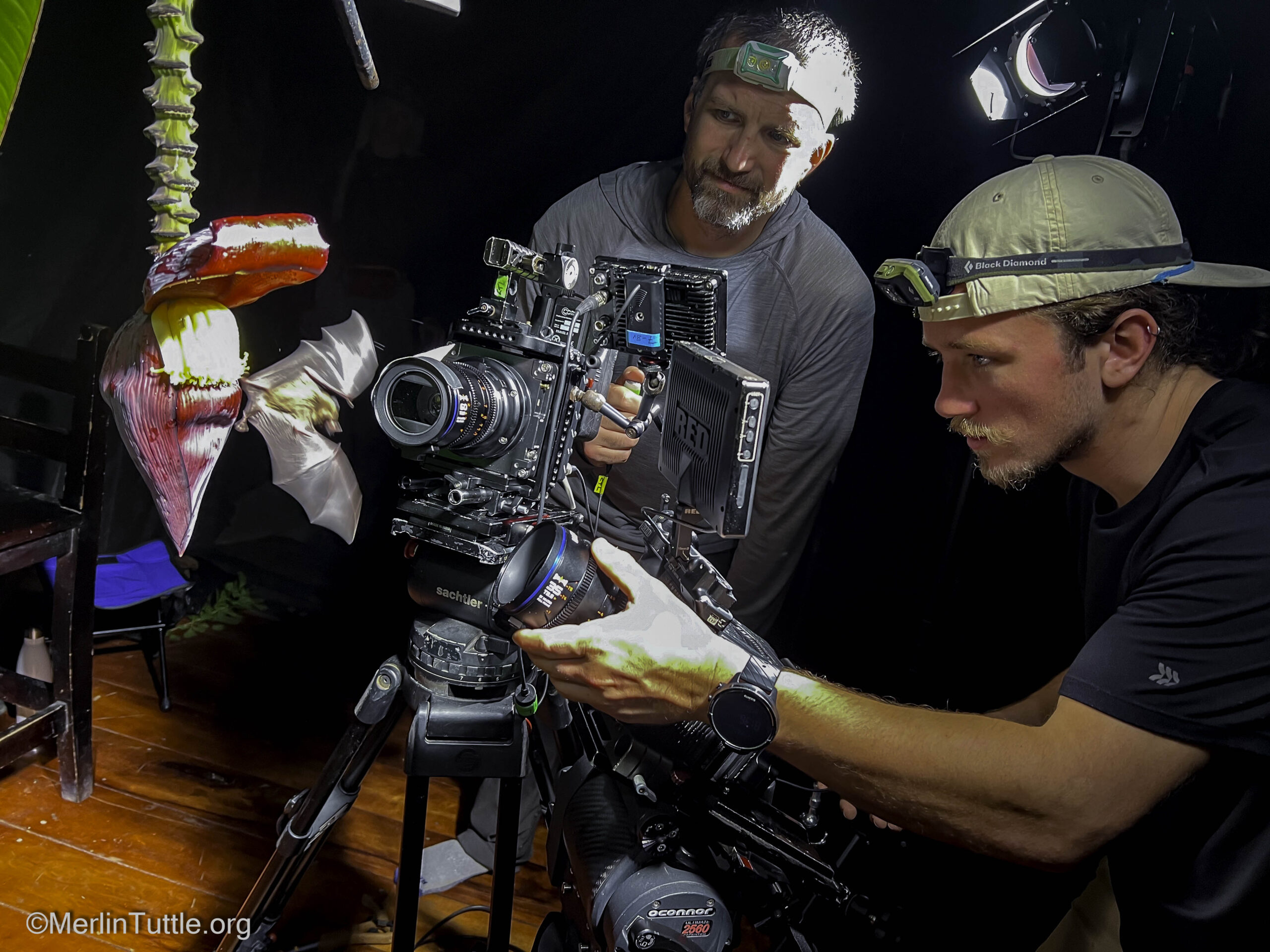
In addition to helping develop and fact-check the educational content, MTBC collaborated with Hobbie on a 2024 filming expedition to Costa Rica, where the team captured footage showcasing bat diversity and behaviors that could not be represented by Texas species alone.
“I thoroughly enjoyed working with Skip and his staff, especially passing on my experience in the procedures required to quickly teach bats to ignore bright lights and cameras, so they could be filmed behaving naturally, without fear,” Tuttle said.
A New Chapter for Austin’s Bats
For Hobbie, the timing of Bat City’s launch is especially meaningful.
The project will debut on August 26th (Merlin Tuttle Day) which also marks Tuttle’s 85th birthday and 40 years since he came to Austin.
The launch comes at an important moment for Austin’s bats as the city continues to grow and major development projects reshape the area around the Congress Avenue Bridge.
The former Statesman site is slated for development, while a new light-rail bridge is planned nearby. Hobbie hopes Bat City will help keep the bats at the forefront of conversations about Austin’s future.
“I just want the bats to be more at the front of everyone’s minds as we approach these projects and really think about and celebrate what we’ve got, instead of just taking it for granted that these bats are there,” he said.
He also hopes visitors leave with more than a great photo or a memorable evening.
“My hope would be that they fall in love with bats the way I have and so many of MTBC’s members have,” Hobbie said. “But at the very least, I hope they’ll learn and take away an appreciation that not only are those bats cool that they just saw, but also that these bats are safe neighbors that are really important to our planet and our economy.”
Celebrate Bat City and Merlin Tuttle Day
Bat City will officially launch on August 26th, making the occasion a double celebration of Austin’s bats and the conservationist who helped make them famous.
The launch will begin at 5:30 p.m. at the Bat City site, with a brief dedication featuring Hobbie, representatives from MTBC, and The Trail Conservancy. The ceremony will give visitors a first look at the new educational experience, before the evening continues with the annual Merlin Tuttle Day Bat Cruise (for those who purchase cruise tickets).
Visitors are encouraged to make an evening of it: celebrate the launch of Bat City, then head to the bat cruise to celebrate Merlin’s 85th birthday and watch Austin’s famous bats take flight.
The timing offers a fitting way to celebrate both Austin’s remarkable bats and Merlin’s decades of work advocating for their protection.
Bringing Bats to Everyone
Bat City is still raising funds to complete the project. It is designed to remain freely accessible online, allowing conservation and education organizations to share the videos and educational resources with their own audiences.
“It’s been important to me from the beginning that all of this information be freely available online,” Hobbie said. “That way, it can reach not only people who are already at the bridge watching the bats, but also people who are planning a visit and want to learn more before they go.”
To learn more about Bat City and explore its educational resources, visit BatCity.info.
With new signage, films, and educational resources, Bat City offers an opportunity to deepen the experience of one of Austin’s most remarkable natural spectacles. Through these resources Hobbie hopes to ensure that the bats beneath the Congress Avenue Bridge are not simply watched, but also are understood, appreciated, and protected.
For Merlin Tuttle’s Bat Conservation, that is ultimately the heart of the project: helping people discover just how extraordinary bats are and why their future matters. To learn more about viewing the Congress Avenue Bridge bats, visit AustinBats.org.