A Self-Perpetuating Cycle of Fear that Threatens Bats

A 40-year-old prediction of “self-perpetuating bat disease hysteria” has been fulfilled.1 Based on my 65 years of experience, I believe it’s time to revise disease-related policies involving bats.

Merlin Tuttle

The April 11, 2026 issue of ECO news, contains an article claiming that scientists are issuing a serious warning. “Bats could be behind a future epidemic.” 2 The author cited evidence from an article in the journal, Communications Biology3 that illustrates a subtle but growing risk of harm to bats and the credibility of science.

The cited publication appears potentially intended to help bats. The authors report that bats aren’t all equally dangerous and conclude in the final paragraph that they perform critical ecosystem services, that many species are at risk of extinction, and that culling bats is counterproductive. Nevertheless, it begins by citing outdated speculation4 presented as fact. Bats do not host more deadly viruses than other animals.5 It also omitted warnings from leading experts, explaining why virus hunting is a big waste of limited resources that should be invested in more urgent needs. 6

Children straining debris from bat guano in Khao Chong Phran Cave in Thailand. As a head monk pointed out, people of all ages have participated in guano collection for fertilizer throughout recorded history without harm. On another trip, Merlin interviewed a guano collector who was nearly 100 years-old and his similarly healthy wife, both of whom had collected guano for their entire lives.

In 1988, Denny Constantine, one of the foremost bat disease experts of his time, warned that a self-perpetuating cycle of bat disease hysteria is harmful to public health. Those of us who care about bats, public health, or the credibility of science can ill afford to ignore his warning.

In my experience, mixed messages7,8,9 solidify traditional fears and challenge the credibility of science. They also can be exceedingly harmful to bats,10 the loss of which can have irreversible environmental and public health consequences. Transmission of disease from bats to humans is extremely rare and easily avoided. Instead of searching for reasons to fear them, we should be researching their unique abilities, and how they can be emulated to save human lives! There is much we can learn from bats by studying their special adaptations to combat viral disease, slow aging, or survive cancer.11

My Experience with Rabies Campaigns

Throughout my career studying and conserving bats, fear of disease has consistently been an important obstacle to conservation.10 I have personally encountered caves and other kinds of bat roosts where thousands to millions of bats have been burned or buried alive by people fearful of disease. I’ve also received reports of bat killing from Indonesia and China to Peru, following early attempts to link Covid-19 to a bat origin.

When I began my thesis study of endangered gray bats in the 1960s health officials in Tennessee were erroneously blaming bats for a rabies outbreak in foxes.12 Thousands of gray bats were killed for sampling, and thousands more were incinerated by cave owners pouring kerosene into their caves and lighting it after being warned that their bats were rabid and dangerous.

In 1971, researchers at a meeting of the American Association for the Advancement of Science concluded that bats were rapidly disappearing, were ecologically essential, and were in immediate need of help.13 However, due to a massive campaign to create fear of bat rabies, conservation efforts had to be abandoned. Despite no evidence of an increase in rabid bats, or human exposures, the U.S. Center for Disease Control (CDC), claimed a bat rabies emergency, and our Environmental Protection Agency began permitting DDT use to kill bats!14,15

By 1974, I was employed as Curator of Mammals at the Milwaukee Public Museum in Wisconsin, where I received numerous calls from frightened homeowners due to an avalanche of warnings that most bats were rabid and dangerous. A story in Family Circle claimed that a family had been trapped in their home for three days and nights by a horde of attacking bats16, and another in Good Housekeeping was titled “Three Years of Terror, a true life ordeal.”17

Under such circumstances, conservation progress was hopeless. Nevertheless, I gradually realized that there was a strong consumer fraud case to be made. Despite intense opposition from the pest control industry, aided by CDC, I found a few honest operators willing to testify in support of my efforts. Also, in an extreme stroke of good luck, Denny Constantine became outraged by the extent of harm to the public and joined my efforts.

Bat researchers had already documented that using DDT to kill bats was counterproductive.18,19 But it had been replaced by Methyl bromide20,21 and Chlorophacinone tracking powder, both of which pose extreme risks to humans as used in bat control.21

Constantine warned “that the worst public health hazards associated with bats are those created when needlessly panicked people are exploited.”21

Despite strong opposition, with Constantine’s help, I convinced the state legislature to pass a bill outlawing bat poisoning. Countering extreme rabies claims paved the way for the founding of Bat Conservation International in 1982. My first priority was the publication of a peer reviewed paper, Bats and Public Health22 which we sent to every state health department in America.

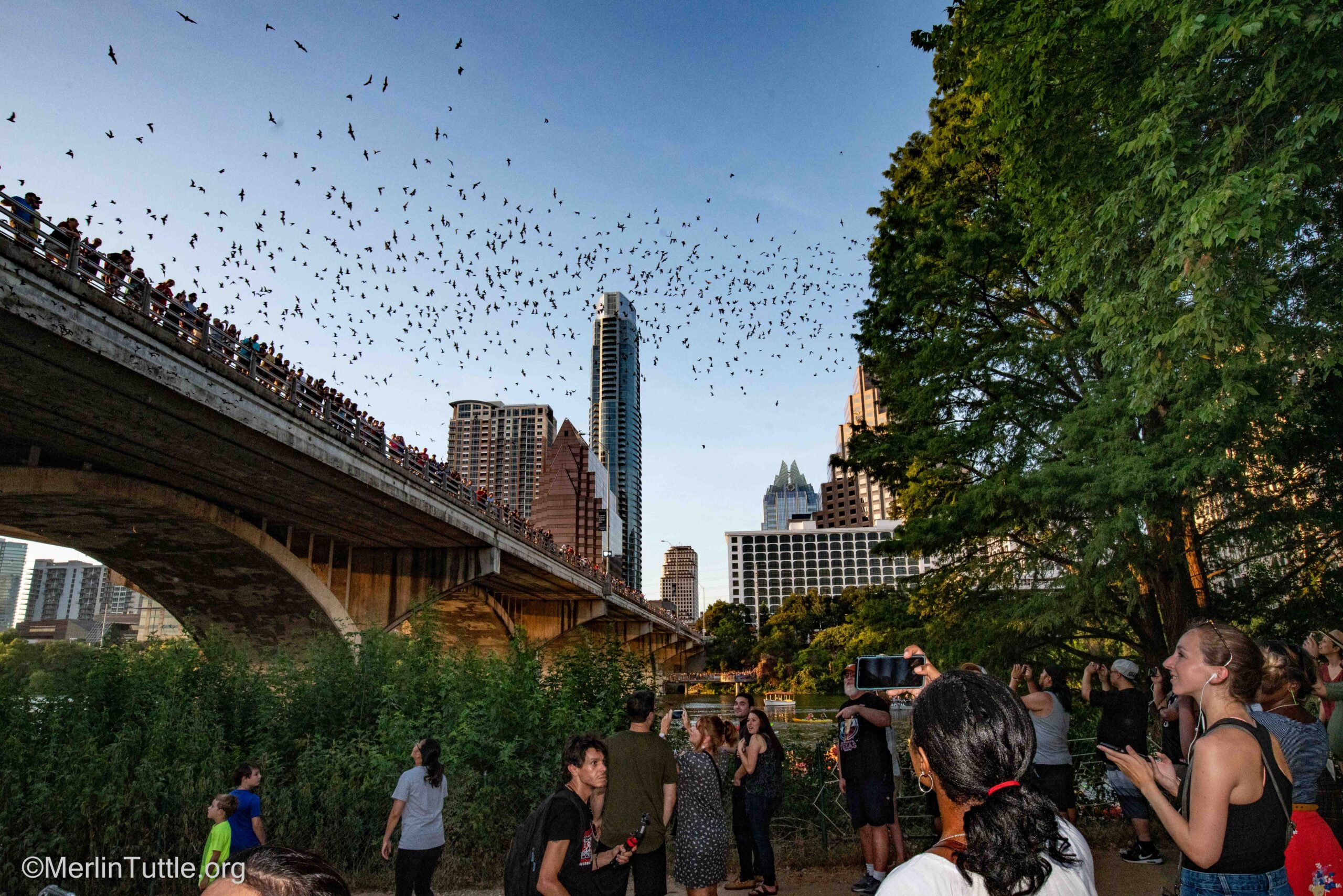
The next challenge became an invaluable opportunity. I learned of it through a UPI press release on September 23, 1984. It claimed that hundreds of thousands of rabid bats were invading and attacking the residents of Austin, Texas.23 I immediately visited Austin and learned that frightened citizens were signing petitions to have the bats eradicated, following health department warnings that most bats were rabid and aggressive. I concluded that this would be an ideal location for undeniable refutation of predicted rabid bat attacks and relocated to Austin. The protected bats are now world famous, have harmed no one, and attract millions of dollars annually in tourism.


Millions of people from all over the world have come to enjoy the spectacular emergences of Brazilian free-tailed bats (Tadarida brasiliensis) from the Congress Avenue Bridge in the center of Austin, Texas. Contrary to early warnings of danger, no one has been harmed or contracted a disease from decades of close contact with approximately a million Brazilian free-tailed bats. The same is true for other bat populations Merlin has visited worldwide.
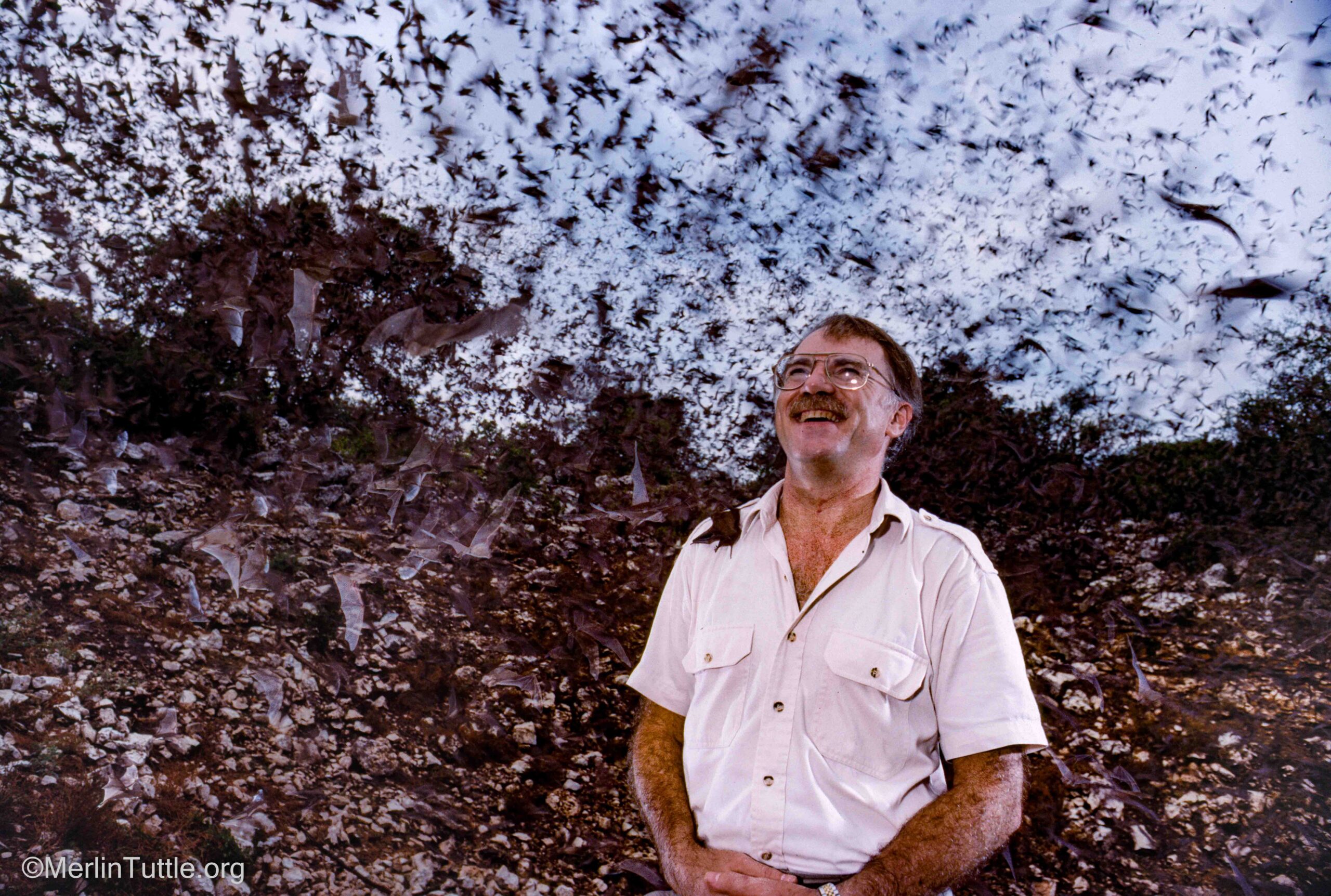
Merlin has studied and photographed bats worldwide for more than 65 years, often surrounded by millions and has never been harmed in any way. This photo was taken as he observed more than 10 million Brazilian free-tailed bats (Tadarida brasiliensis) emerge from Bracken Cave in Texas. These now popular bats are visited by guests on a daily basis, all summer long. Again, no one has ever been harmed.

Next, with Constantine’s help, I published America’s Neighborhood Bats, a layman’s book in which I put rabies fears in perspective and explained how to detect fraud.21 Homeowners began suing dishonest pest control companies, ending bat poisoning nationally. There are only one or two human cases of rabies from bats annually in the U.S and Canada combined,24 and those could be avoided by simply not carelessly handling bats. See my resource, Rabies in Perspective,25 for a detailed discussion.

America enjoyed a little more than a decade of reduced scare campaigns, though the CDC helped vaccine producers gain a massive increase in sales by claiming that bat bites are often undetectable.26 Researchers meeting at the 29th Annual North American Symposium on Bat Research, on October 30, 1999, passed a resolution stating that they “find no credible support for this hypothesis.” 27 However, undetected bites remain a widespread and costly myth.

Emerging Virus Campaign

Beginning with the discovery of SARS in 2002,28 the largest disease scare campaign in history began.29 It focused heavily on bats. However, despite seemingly endless efforts,30 not even SARS has been confirmed to have a bat origin.31

The new media campaign included some of the most irresponsible headlines yet seen.32,33, 34,35,36 Virus hunting in bats became an unprecedentedly lucrative source of funding,29,37 despite early warnings from leading virologists that virus hunting was a waste of limited resources that was likely to harm the credibility of science.6,37

As in the earlier rabies campaign, the news media chose sensationally headlined speculation over less provocative truth. Searches for the virus that was causing the Covid-19 pandemic focused primarily on bats. Bats were far easier to sample quickly, and were already widely misunderstood, providing an ideal combination for rapid publication and career advancement.38

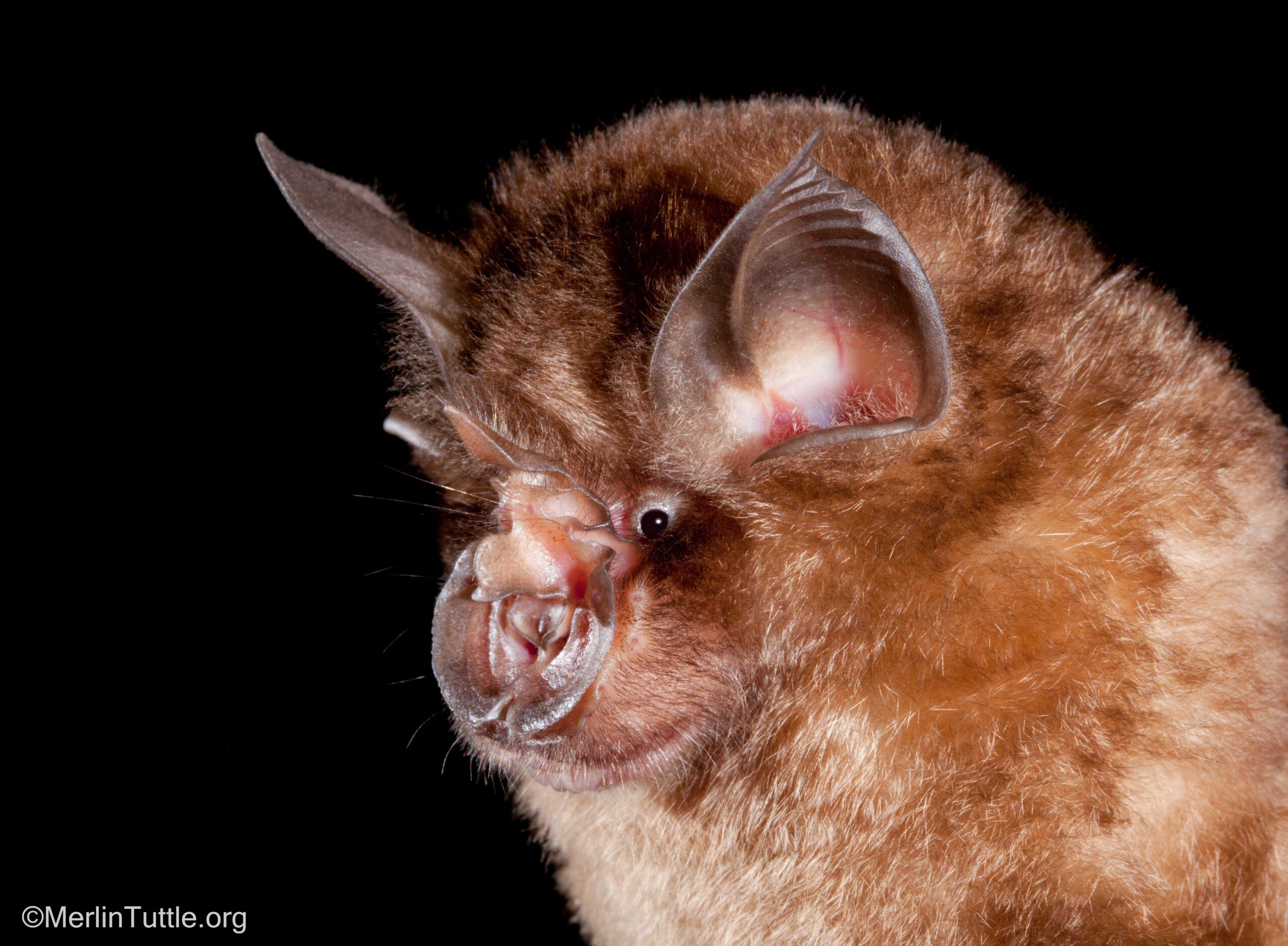
This intermediate horseshoe bat (Rhinolophus affinis) is one of more than one hundred species of horseshoe bats found throughout the Old World tropics. These bats have been speculated to be the source of SARS and Covid-19 — without any credible documentation. The source of Covid-19 remains controversial, but there is no credible evidence linking it to a bat origin.

An analysis of virological literature showed that 51% of all relevant studies portrayed bats as a major concern for public health, while their vital roles in ecosystem services were omitted in 96%. Such biased framings can undermine decades of conservation progress.39,40

Despite millions of dollars invested in attempts to prove rather than test bat-origin hypotheses, we still don’t know the origins for most of the so-called emerging diseases commonly reported to be of bat origin. In fact, available evidence suggests non-bat origins for both Ebola41,42,43 and Covid-19.44,45

A 2024 investigation published by public health experts at Leeds University, titled “Rational Policy over Panic,” found numerous instances of misinterpretation of key evidence, and warned that “the data relied on as evidence is poorly supportive of current pandemic risk assumptions,” and concluded that the claimed urgency is unwarranted.29

The March 22, 2004 issue of The Wall Street Journal included a summary of the Leeds University findings in an article titled “Why Scientists Love Chasing Bats.” It concluded that “the threat to humans from animal viruses is small. The financial incentive to pretend otherwise is large.” 46 Both sources emphasize that proposed investments of more than 10 billion dollars in pandemic preparedness would diminish funds available for tackling far greater threats from diseases, such as malaria and tuberculosis. Furthermore, they noted that urgency is not justified by careful analysis of existing data.

Many of the most damaging disease claims attributed to bats have been associated with the EcoHealth Alliance, and its President, Peter Daszak.  He withheld key evidence that likely could have identified the source of the Covid-19 pandemic, while attempting to blame bats.44,45 Following an eight-month investigation by the U.S. Congress’ Select Subcommittee on the Covid-19 pandemic, Daszak and the EcoHealth Alliance were both debarred, and he was fired for fraudulent reporting.44 He now has founded a new organization, Nature Health Global,47 which among other things, credits him with discovering bats to be the source of MERS48, despite strong evidence linking it to camels as the most likely source.38,49,50 If the same evidence found in camels had been discovered in bats, it seems virtually certain that those hoping to implicate bats would not have said, “But the bats must have gotten it somewhere, perhaps from camels!”

How Covid-19 Reporting Harmed Perceptions of Bats

This is not merely an academic battle. It’s having real, worldwide effects on conservation. A 2020 study in China revealed a surge in bat intolerance.51 The number of surveyed college students with a neutral attitude toward bats prior to the Covid-19 outbreak, decreased by 17.4%, and negative attitudes increased by 14.7%. Overall, 84.6% of those interviewed mistakenly believed that it is highly likely that bats carry SARS-COV-2, and 53.4% believed that bats can transmit it directly to humans. Surprisingly, 84% of bat workers were nearly as confused as the students on the risks associated with SARS-COV-2, the virus that causes Covid-19! Students who feared bats were most likely to support culling.40

Students who attended lectures presenting only the values of bats showed little change in attitudes, whereas there was improvement among those who attended a lecture that included information reducing fear of disease. Following reports of genomic similarity between bat-derived coronaviruses and SARS-COV-2, repelling events were reported across China, and ecological culling was proposed by lawmakers. A search of 7000 citations of the original SARS-COV-2 paper, found no evidence of a relationship between bats and COVID-19. The authors concluded there is an urgent need to correct public misunderstandings of viruses from bats.40 Unsupported speculation quickly became accepted as fact,52 seriously compromising the public image of bats as providers of key ecosystem services.53

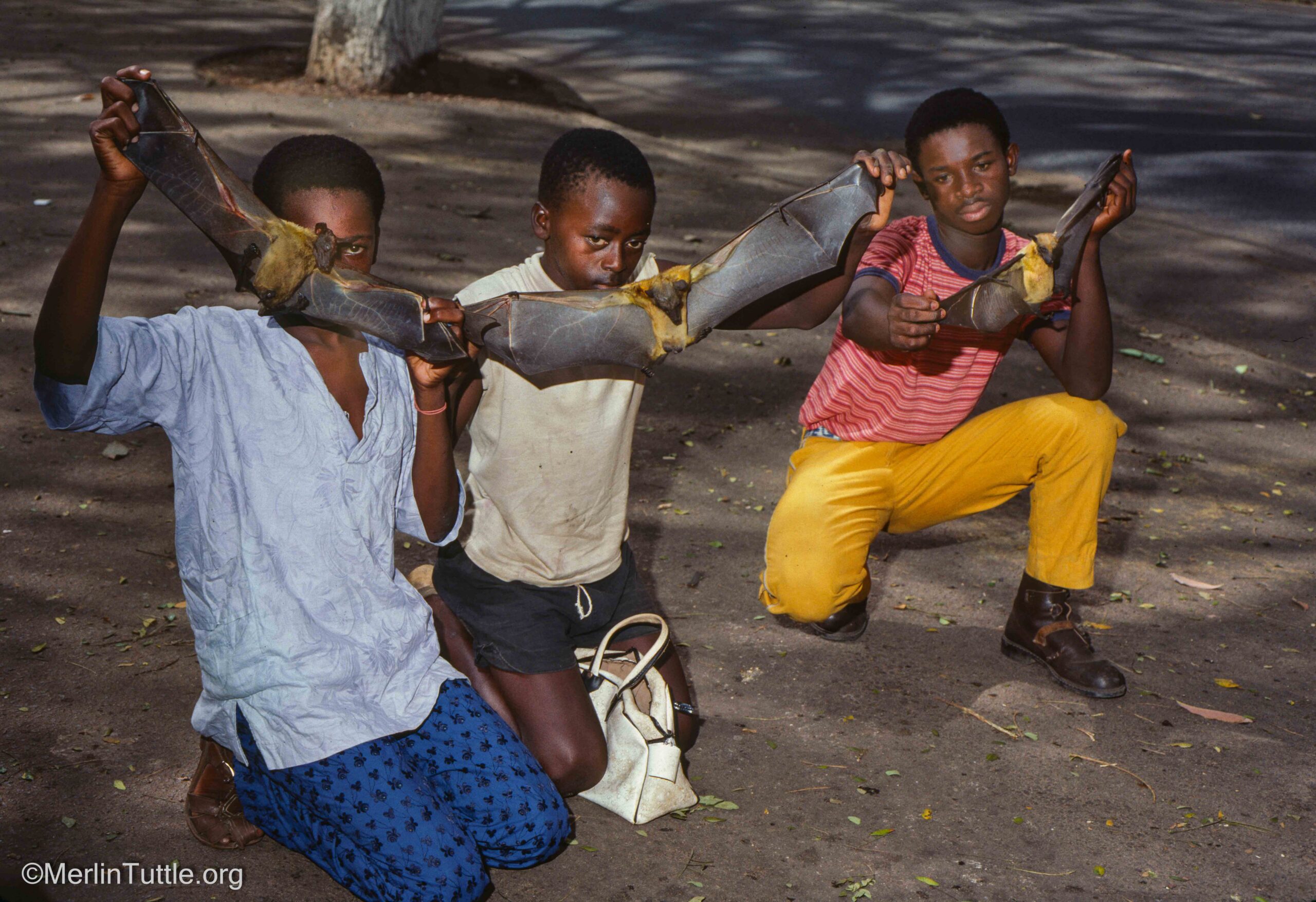
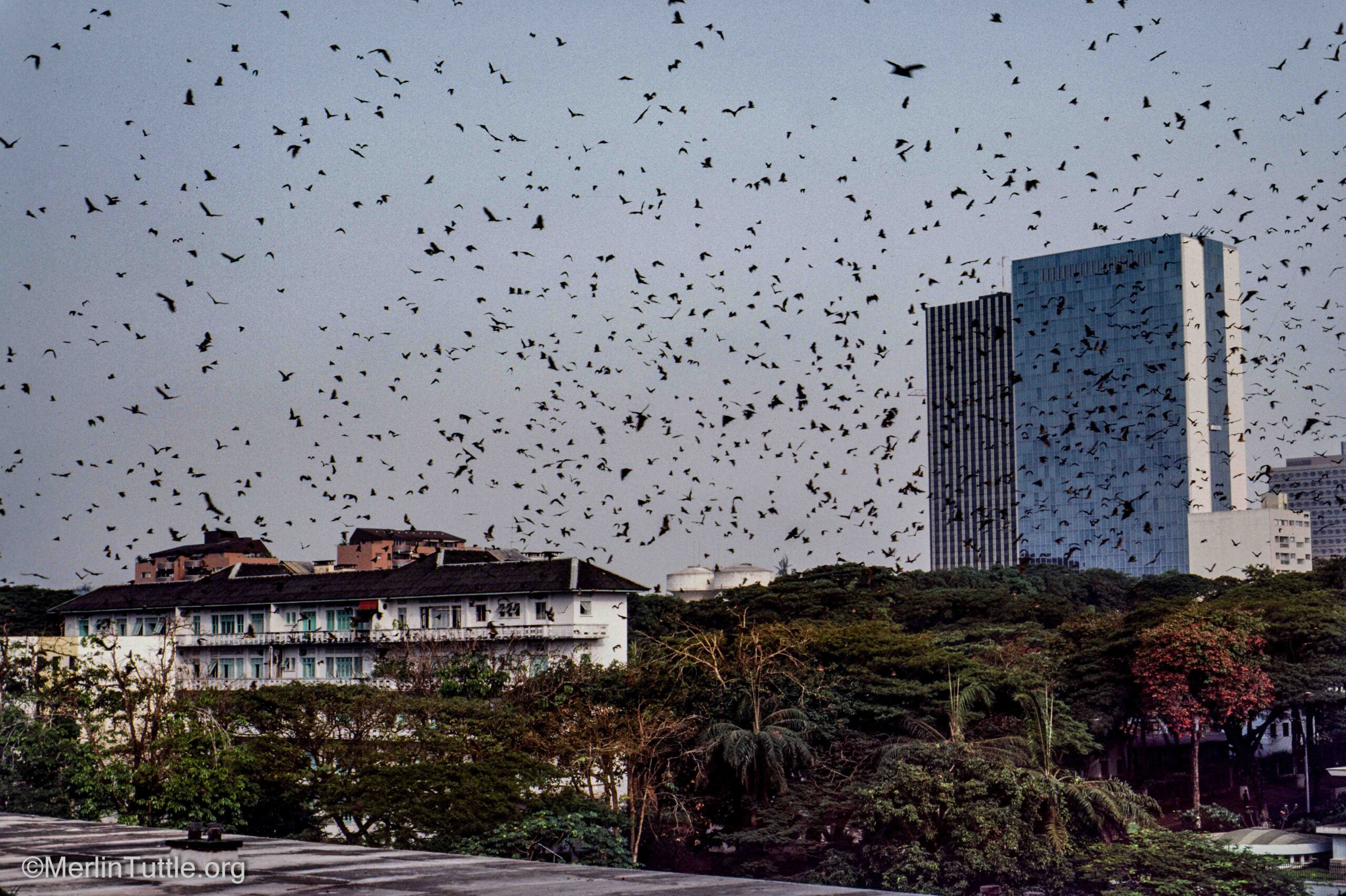
In Equatorial Africa (including Abidjan, Ivory Coast) hundreds of thousands of straw-colored fruit bats (Eidolon helvum) share cities with people and often are hunted for food. Despite speculation of disease risks, none of the millions of people, throughout the Old World tropics, who hunt and eat these and similar bats, there is no credible evidence of resulting disease outbreaks. This photo was taken in Abidjan of teenage boys who earn a living selling bats for people to eat.
An evening emergence of hundreds of thousands of straw-colored fruit bats beginning their evening departure from Abidjan, Ivory Coast. Cities often provide the only homes safe from commercial hunters who sell these bats for food. Despite such large numbers having lived in close association with humans throughout recorded history, these bats have not caused disease outbreaks. Their remarkable safety record casts grave doubt on recent speculation of their being dangerous carriers of diseases, such as Ebola.

Conclusions and Recommendations

Historically, bats have one of our planet’s finest records of not causing disease outbreaks.38 There have been no viral outbreaks recorded among the millions of humans who eat bats, live in cities with large bat populations, or among the thousands who extract guano fertilizer, explore caves, or study bats. (I’m not counting Covid-19 because there is no credible evidence linking it to a bat origin. I am also unaware of evidence of transmission from a human to a bat.)

Overcoming public fear of bats has always been challenging. It is difficult to convincingly reassure people that bats are safe neighbors if we who study them are required to wear protective gear when entering places where bats live.

Fear of peer pressure and potential loss of permits inhibits bat workers from protesting against costly and ineffective, but often mandated use of protective gear and equipment decontamination. Such restrictions are unenforceable.54 My personal observations indicate that bat workers are a small minority of humans who enter bat caves, most without even being aware of restrictions. Pre-exposure rabies vaccination has a long history of success in protecting bat workers who are occasionally bitten in self-defense while handling bats, and it is the only protection I have used (beyond the occasional leather glove when handling extra-large bats).

Transmission of disease from bats to humans is exceedingly rare and easily avoidable. Also, transmission to a bat from a human has not been documented despite countless opportunities. Even in the case of the fungus Pseudogymnoascus destructans, which has been speculated to have arrived in North America on a human who visited caves, there is an equal (or in my opinion higher) probability that it arrived aboard a ship. Bat arrivals aboard shipping containers are more common than realized,55 so an infected bat likely would have arrived sooner or later regardless of human visits to caves.

Loss of grants is a serious concern for researchers who care about bat conservation. Universities have become highly dependent on overhead from multimillion dollar grants to search for potentially pathogenic viruses in bats. Failure to find such viruses can result in loss of tenure opportunities or employment. Publication of negative findings can be extremely difficult in a climate where speculation and exaggeration of disease risks from bats is rewarded.

A major paradigm shift is urgently needed.11 Research goes where the money flows. And for more than a decade unsurpassed billions of dollars have been diverted from critically important areas of research and education to fund searches for diseases in bats. The more frightening the speculation the better the funding and career advancement.

Exaggerated disease warnings have caused people and their governments to panic, diverting unprecedented funding from higher priority needs.6,29 There is much we can learn from bats — how to improve human disease resistance, slow aging, and develop more effective medical treatments for cancer. Even tiny bats can live to be more than 40 years old, and they rarely get arthritis or cancer. Long neglected and persecuted, bats now rank among the world’s most endangered mammals, despite the key roles they play in protecting healthy ecosystems and economies upon which we depend. Fundamentally, we can’t afford to ignore their plight by continuing to spread unnecessary fear, without threatening our own future.

Bibliography

  1. Constantine, D.G. 1978. “Bats, rabies and DDT.” (letter to the editor, 20 April 1978), New Engl. J. Med., 289:915.
  2. Villellas, Adrian. “Scientists agree on this and are issuing a serious warning: these bats could be behind a future epidemic in the most affected areas of the planet.” ECOnews (ECOticias.com) (April 11,2026).
  3. Cummings, Caroline A., et al. “Viral epidemic potential is not uniformly distributed across the bat phylogeny.” Communications Biology 8.1 (2025): 1510.
  4. Anthony et al 2017… “Anthony, S. J., Johnson, C. K., Greig, D. J., Kramer, S., Che, X., Wells, H., Hicks, A. L., Joly, D. O., Wolfe, N. D., Daszak, P., Karesh, W., Lipkin, W. I., Morse, S. S., Mazet, J. A. K., & Goldstein, T. (2017). Global patterns in coronavirus diversity. Virus Evolution3(1). https://doi.org/10.1093/ve/vex012
  5. Mollentze, Nardus, and Daniel G. Streicker. “Viral zoonotic risk is homogenous among taxonomic orders of mammalian and avian reservoir hosts.” Proceedings of the National Academy of Sciences 117.17 (2020): 9423-9430.
  6. Holmes, Edward C., Andrew Rambaut, and Kristian G. Andersen. “Pandemics: spend on surveillance, not prediction.” (2018): 180-182.
  7. Robbins, Jim. “A Secret Weapon in Preventing the Next Pandemic: Fruit Bats.” Scientific American (February 3, 2023).
  8. Treuer, Timothy, Rocha Ricardo,  Brook, Cara. “Bats Are Not Our Enemies.” Scientific American (May 15, 2020).
  9. Mills, Cynthia. “Bats and infectious disease” EBSCO Research. (2025) https://www.ebsco.com/research-starters/health-and-medicine/bats-and-infectious-disease#bats-and-infectious-disease
  10. Tuttle, Merlin D. “Fear of bats and its consequences.” Journal of Bat Research and Conservation (2017): 66-69. https://secemu.org/wp-content/uploads/2022/05/Tuttle_et_al_2017.pdf
  11. Weinberg, Maya, and Yossi Yovel. “Revising the paradigm: Are bats really pathogen reservoirs or do they possess an efficient immune system?.” IScience (2022).
  12. Fredrickson, Luther E., and Luttrell Thomas. “Relationship of fox rabies to caves.” Public Health Reports 80.6 (1965): 495.
  13. Henshaw, Robert E. “Cave bats: their ecology, physiology, behavior and future survival.” Bulletin of the National Speleological Society 34.2 (1972): 31-32.
  14. Tuttle, Merlin D. “Threats to bats and educational challenges.” Bat evolution, ecology, and conservation. New York, NY: Springer New York, 2013. 363-391. https://doi.org/10.1007/978-1-4614-7397-8_18
  15. S. Environmental Protection Agency archive document “DDT (50-29-3)“ https://www.epa.gov/archive/epa/sites/production/files/documents/DDTFRpages.pdf
  16. “The Nightmare House” Family Circle magazine in April 1, 1980 issue (Volume 93, pages 64-94).
  17. “Three Years of Terror: A Real Life Ordeal,” Good Housekeeping, 1977, Volume 184, p. 83-134).
  18. Barclay, Robert MR, Donald W. Thomas, and M. Brock Fenton. “Comparison of methods used for controlling bats in buildings.” The Journal of Wildlife Management(1980): 502-506.
  19. Kunz, Thomas H., Edythe LP Anthony, and W. Timothy Rumage III. “Mortality of little brown bats following multiple pesticide applications.” The Journal of Wildlife Management (1977): 476-483.
  20. S. Centers for Disease Control and Prevention (CDC), Agency for Toxic Substances and Disease Registry (ATSDR) https://wwwn.cdc.gov/tsp/MMG/MMGDetails.aspx?mmgid=818&toxid=160#bookmark02
  21. Tuttle, Merlin D. America’s neighborhood bats: Understanding and learning to live in harmony with them. University of Texas Press, 2005.
  22. Tuttle, Merlin D., and Stephen J. Kern. Bats and public health. Contributions in Biology and Geology, Milwaukee Public Museum, Number 48. 1981. https://www.mpm.edu/sites/default/files/files%20and%20dox/C%26R/library/bio-geo/%23048%20MPM%20Contributions%20in%20Biology%20and%20Geology%20Number%2048.pdf
  23. Rabies-carrying bats invade state capital. Sept. 23, 1984 https://www.upi.com/Archives/1984/09/23/Rabies-carrying-bats-invade-state-capital/5794464760000/
  24. Pieracci EG, Pearson CM, Wallace RM, et al. Vital Signs:Trends in Human Rabies Deaths and Exposures — United States, 1938–2018. MMWR Morb Mortal Wkly Rep 2019;68:524–528. DOI: http://dx.doi.org/10.15585/mmwr.mm6823e1
  25. Tuttle, Merlin D., Rabies in Perspective https://www.merlintuttle.org/rabies-in-perspective/
  26. Eidson, Millicent, et al. “Bat rabies and human postexposure prophylaxis, New York, USA.” Emerging Infectious Diseases 17.12 (2011): 2380.
  27. Mlot, Christine. “Bat researchers dispute rabies policy.” Science 287.5462 (2000): 2391-2392.
  28. Li, Wendong, et al. “Bats are natural reservoirs of SARS-like coronaviruses.” Science (2005): 676-679.
  29. Bell, D., et al. “Rational policy over panic: re-evaluating pandemic risk within the global pandemic prevention, preparedness and response agenda.” Leeds: University of Leeds (2024).
  30. Cyranoski, David. “Bat cave solves mystery of deadly SARS virus–and suggests new outbreak could occur.” Nature 552.7683 (2017): 15-17.
  31. Racey, Paul A., et al. “Don’t misrepresent link between bats and SARS.” Nature (2018): NA-NA.
  32. Sifferlin, Alexandra. “Bats Are the Number-One Carriers of Disease” Time (Jun 22, 2017)
  33. Arnold, Carrie. “Reservoir Bats: Spreading Contagion on Night’s Wing.” NewScientist (2014). https://www.merlintuttle.org/wp-content/uploads/2016/05/Contagion.pdf
  34. Kupferschmidt, K. “Bat out of Hell? Egyptian tomb bat may harbor MERS virus.” Science News(2013).
  35. Kupferschmidt, K. 2013. Bats may be carrying the next SARS pandemic. Science http://www.sciencemag.org/news/2013/10/bats-may-be-carrying-next-sars-pandemic
  36. Thomas, D. 2017. Bats likely source of next worldwide disease outbreak, study finds. Austin Amer. Statesman, https://www.statesman.com/story/news/local/2017/06/22/bats-likely-source-next-worldwide/6702792007/
  37. Morrison, J. “Can virus hunters stop the next pandemic before it happens.” Smithsonian Magazine 25 (2018). https://www.smithsonianmag.com/science-nature/how-to-stop-next-animal-borne-pandemic-180967908/
  38. Tuttle, Merlin D. “Give bats a break: searches for new viruses in bats are unlikely to contribute substantially to human health, but they may threaten the future of bats.” Issues in Science and technology 33.3 (2017): 41-51. https://www.merlintuttle.org/wp-content/uploads/2017/03/Tuttle-Give-Bats-a-Break-Spring-2017-IST.pdf
  39. Citation should be(!): López‐Baucells, Adrià, Ricardo Rocha, and Álvaro Fernández‐Llamazares. “When bats go viral: negative framings in virological research imperil bat conservation.” Mammal Review 48.1 (2018): 62-66.
  40. Lu, Manman, et al. “Does public fear that bats spread COVID-19 jeopardize bat conservation?.” Biological conservation 254 (2021): 108952.
  41. Fairhead, James, Melissa Leach, and Dominique Millimouno. “Spillover or endemic? Reconsidering the origins of Ebola virus disease outbreaks by revisiting local accounts in light of new evidence from Guinea.” BMJ Global Health 6.4 (2021).
  42. Leendertz, S. A. J. 2016. Testing new hypotheses regarding ebolavirus reservoirs,” Viruses 8, no. 30 (2016): 30.
  43. Kupferschmidt, Kai. “New Ebola outbreak likely sparked by a person infected 5 years ago.” Science (2021): 1342-1344.
  44. S. Committee on Oversight and Government Reform. https://oversight.house.gov/release/breaking-hhs-formally-debars-ecohealth-alliance-dr-peter-daszak-after-covid-select-reveals-pandemic-era-wrongdoing/
  45. Wade, Nicholas. “The origin of COVID: Did people or nature open Pandora’s box at Wuhan.” Bulletin of the Atomic Scientists 5.2021 (2021): 491-542. https://thebulletin.org/2021/05/the-origin-of-covid-did-people-or-nature-open-pandoras-box-at-wuhan/
  46. The Wall Street Journal (WSJ), Why Scientists Love Chasing Bats: The threat to humans from animal viruses is small. The financial incentive to pretend otherwise is large, March 6, 2024. https://www.wsj.com/opinion/why-scientists-love-chasing-bats-research-aid-animal-virus-spillover-pandemic-ac289118
  47. https://naturehealthglobal.org/
  48. https://naturehealthglobal.org/nhg-scientists-and-staff/
  49. Nowotny, N., and J. Kolodziejek. “Middle East respiratory syndrome coronavirus (MERS-CoV) in dromedary camels, Oman, 2013.” Eurosurveillance (2014): 20781.
  50. World Health Organization (WHO), Middle East respiratory syndrome coronavirus (MERS-CoV), https://www.who.int/news-room/fact-sheets/detail/middle-east-respiratory-syndrome-coronavirus-(mers-cov)
  51. Zhao, Huabin. “COVID-19 drives new threat to bats in China.” Science (2020): 1436-1436. https://www.science.org/doi/10.1126/science.abb3088
  52. MacFarlane, Douglas, and Ricardo Rocha. “Guidelines for communicating about bats to prevent persecution in the time of COVID-19.” Biological Conservation 248 (2020): 108650.
  53. Cerri, Jacopo, et al. “COVID‐19, media coverage of bats and related Web searches: a turning point for bat conservation?.” Mammal Review 52.1 (2022): 16-25.
  54. Chen, Edward. “‘Bat feast’ animal videos at African cave offer clues to how deadly viruses spread.” Nature (20 April 2026) https://doi.org/10.1038/d41586-026-01259-4
  55. Constantine, Denny G. “Geographic translocation of bats: known and potential problems.” Emerging infectious diseases 9.1 (2003): 17.

Love our content? Support us by sharing it!

Facebook
Twitter
Email

Related Posts

Batty Gifts for Bat Fans

Are you looking for gifts that delight bat lovers while supporting conservation and education? From beautifully illustrated picture books for young readers to behind-the-scenes storytelling,

Read More »

Don't miss a post!

Get all the latest news from MTBC delivered straight to your inbox.

Daniel Hargreaves

Daniel Hargreaves is a lifelong bat conservationist who has worked globally to facilitate progress, including co-founding Trinibats, a non-profit bat conservation organization in Trinidad. He has organized and led field workshops worldwide, including five for MTBC. Following a long and successful career in business, he now manages a network of bat reserves for the Vincent Wildlife Trust in the UK, supervising research and development of new and innovative conservation techniques. Daniel also is one of the world’s premier bat photographers.

Madelline Mathis

Madelline Mathis has a degree in environmental studies from Rollins College and a passion for wildlife conservation. She is an outstanding nature photographer who has worked extensively with Merlin and other MTBC staff studying and photographing bats in Mozambique, Cuba, Costa Rica, and Texas. Following college graduation, she was employed as an environmental specialist for the Florida Department of Environmental Protection. She subsequently founded the Florida chapter of the International DarkSky Association and currently serves on the board of DarkSky Texas. She also serves on the board of Houston Wilderness and was appointed to the Austin Water Resource Community Planning Task Force.

Michael Lazari Karapetian

Michael Lazari Karapetian has over twenty years of investment management experience. He has a degree in business management, is a certified NBA agent, and gained early experience as a money manager for the Bank of America where he established model portfolios for high-net-worth clients. In 2003 he founded Lazari Capital Management, Inc. and Lazari Asset Management, Inc.  He is President and CIO of both and manages over a half a billion in assets. In his personal time he champions philanthropic causes. He serves on the board of Moravian College and has a strong affinity for wildlife, both funding and volunteering on behalf of endangered species.